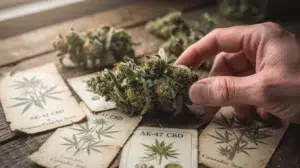

The entire European CBD landscape has been undergoing profound transformation in recent years. Major adjustments are affecting everything from agricultural production and the sale of CBD products their legal status as therapeutic substances. The year 2025 is shaping up to be crucial with the entry into force of new directives within the European Union, marking a turning point for industry players and consumers. It is therefore essential to understand how European legislation and howFrance and the European Union are aligning with it, as well as the main changes concerning the levels THC permitted, authorized hemp varieties , and the regulations governing the medical and recreational uses of cannabidiol.
The foundations of the new CBD regulations
The year 2025 marks a pivotal moment in theevolution of the legal framework for CBD. For some time now, the European Commission has been multiplying its initiatives to harmonize CBD regulations across its various member states. Until now, each country still had significant room for interpretation, generating commercial uncertainty and legal insecurity surrounding the marketing of CBD.
This trend is now expected to fade thanks to European legislation . The objectives are clear: to guarantee consumer safety, support the hemp industry, and avoid any risk of confusion with traditional recreational cannabis. For detailed information on regulatory developments and clarification regarding the maximum permitted concentration, please refer to the legislation on CBD in France and the European Union.
Towards a common definition of CBD and medical cannabis
A key aspect of this evolution concerns the clear distinction between medical or therapeutic cannabis and products containing only CBD extracted from industrial hemp. This regulatory clarification should prevent cannabidiol from being wrongly associated with illicit drugs.
The forthcoming directive therefore proposes a harmonized list of hemp varieties authorized in Europe and precisely defines their medical or wellness uses. This recognition will foster trust among practitioners and patients, as well as specialized distributors.
Standardization of manufacturing and marketing standards
The unification of practices is also reflected in the standardization of manufacturing processes , traceability , and labeling for all CBD-based products intended for the European market. This includes dried flowers, oils , cosmetics, and hemp-derived food supplements.
labelingof the permitted THC level will become mandatory on all packaging from 2025; this single threshold will replace the multiple national values previously observed. Furthermore, increased controls by health authorities will help to effectively limit the risks of fraud or misinformation to consumers.
Permitted THC levels and hemp varieties: what adjustments are needed?
The permitted THC level is often the cornerstone of CBD regulation in Europe. In 2025, EU legislation will establish a uniform maximum threshold for the entire territory: it will be set at 0.3% THC, in all forms combined. This criterion aims to guarantee the low psychoactive effects of hemp-derived products and facilitate their movement within Europe. It should be noted that this rule stems from the recognition of CBD as a legal product within the European Union when it complies with this threshold, as defined in the European regulations on maximum THC content.
The adoption of this standard responds to the need to offer greater legal certainty, while stimulating the competitiveness of the European sector in the face of increasingly dynamic international markets.
Impact on producers and variety selection
A direct consequence of theevolving legal framework is the creation of a " positive list " of authorized hemp varieties. This encourages European farmers to favor certain strains that strictly adhere to the THC limit set at the European level.
This mechanism simplifies the task for growers, who will be able to rely on a specific set of referenced varieties offering agronomic stability and regulatory compliance. The eligible varieties will be regularly updated based on genetic developments and research conducted on industrial hemp.
List of authorized hemp varieties
- Fedora 17
- Futura 75
- Santhica 27
- Epsilon 68
- CS
These varieties illustrate the effort toalign France and the European Union, as they represent common references authorized in several member states.
Consequently, the marketing of CBD derived from these strains will benefit from greater fluidity of exchanges and better acceptance among both professionals and individuals.
CBD marketing and sales in 2025: restrictions and prospects
The sale of CBD will be particularly impacted by the updated European legislation. Harmonizationaims to prevent certain states from imposing additional, unjustified constraints that would unnecessarily restrict the market.
Different categories of CBD products will be subject to specific regulations starting in January 2025, including food, cosmetics, and e-liquids. Vigilance will be essential to eliminate any formulations that could pose a risk to public health.
New classification of CBD products
Finished products will be classified according to their method of use and cannabinoid content. This measure will increase transparency for consumers and help regulators better target their monitoring.
Only products with explicit authorization will be offered for sale. Certain types of processing or use will remain regulated or even prohibited, especially when there are potential risks associated with ingesting or inhaling high doses of CBD or residual THC.
Summary table of constraints by product category
| Category | Maximum THC content (%) | Packaging | Sale authorized |
|---|---|---|---|
| Dried flowers | 0,3 | Sealed packaging, regulatory label | Specialty shop, pharmacy |
| Oils/sublingual | 0,3 | Secure dropper | Pharmacy, specialty store |
| Cosmetics | 0,3 | Sealed tube/jar/case | Large retailers, pharmacies |
| Eating | 0,3 | Food packaging compliant | Grocery store, organic shop |
The strict application of these criteria will allow optimal alignment between France and European partners, thus limiting differences in treatment depending on the distribution channel or intended use.
Prohibitions and adaptations: what challenges for professionals?
Despite these advances, specific restrictions remain in certain scenarios. CBD regulations may therefore temporarily prohibit certain commercial practices if justified by the protection of minors or public health concerns.
Limitations will also remain regarding advertising and certain unsubstantiated health claims when promoting CBD products. Operators will therefore have every incentive to adapt quickly and anticipate any changes to the legal framework imposed by European legislation.
The evolution of control and sanction methods
National and European authorities will strengthen random and systematic inspections. Sanctions will be graduated according to the severity of the offense: warnings, withdrawal from the market, or even substantial administrative fines in cases of repeated offenses or serious breaches.
A constant dialogue has now been established between regulatory bodies, certification laboratories, and representatives of the hemp industry. This partnership remains essential to ensure a secure transition and provide consumers with solid guarantees regarding the quality and conformity of products placed on the market.
Frequently asked questions about European CBD regulations in 2025
What is the new permitted THC level in CBD products in Europe in 2025?
From 2025, European legislation sets a uniform THC limit of 0.3% across all member states . This standardization eliminates national disparities. It means that all production and imports must strictly adhere to this maximum threshold for each commercial product.
- Oils and capsules : 0.3% THC max
- Raw flowers : 0.3% THC max
- Cosmetics : 0.3% THC max
Which varieties of hemp will be allowed under European CBD regulations?
The upcoming legislation includes an updated official list of authorized hemp varieties, selected for their agronomic reliability and THC stability. These include Fedora 17, Futura 75, Santhica 27, Epsilon 68 , and CS. These varieties provide a solid foundation for ensuring both compliance and the economic viability of crops intended for CBD production.
- Adaptability to the European climate
- Naturally low THC content
- Stability of yields
Which CBD products will remain subject to restrictions or bans in 2025?
Even with a harmonized framework, certain forms of CBD will remain subject topersistent prohibitions. For example, highly concentrated infused foods without prior authorization, e-liquids with dosages exceeding permitted levels, or any advertising suggesting illegal or unsupervised use.
- Misleading advertising or unproven health claims
- Products exceeding 0.3% THC
- Forms prohibited for sale to minors
How will France align itself with European CBD legislation?
Alignmentbetween France and the European Union is achieved through the transposition of EU directives into national law. From 2025, France will adopt the official list of accepted varieties, apply the same permitted THC level , and simplify the licensing process for compliant operators. Particular attention will also be paid to combating the illicit market through increased controls and enhanced collaboration with customs and health agencies.
| Action | Application date |
|---|---|
| Adoption of the THC rate of 0.3% | January 2025 |
| Updating the list of varieties | First half of 2025 |

Co-founder of CBD.fr
Julien Cordobes is the editor of CBD.fr. Born in 1978 in the Paris region, he first trained in e-commerce before turning to natural health approaches, a dual perspective that now structures his way of writing about cannabidiol: reading the scientific literature as it is, without hardening the conclusions, and presenting it in a language that everyone understands.
He discovered CBD at a time when the French market was developing faster than the information available to it. He acquired CBD.fr in 2022 and then took on editorial responsibility for the blog. Since then, he has published numerous articles covering the daily use of CBD, the interpretation of laboratory analyses, the evolution of the legal framework, and precautions for use.