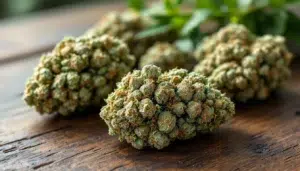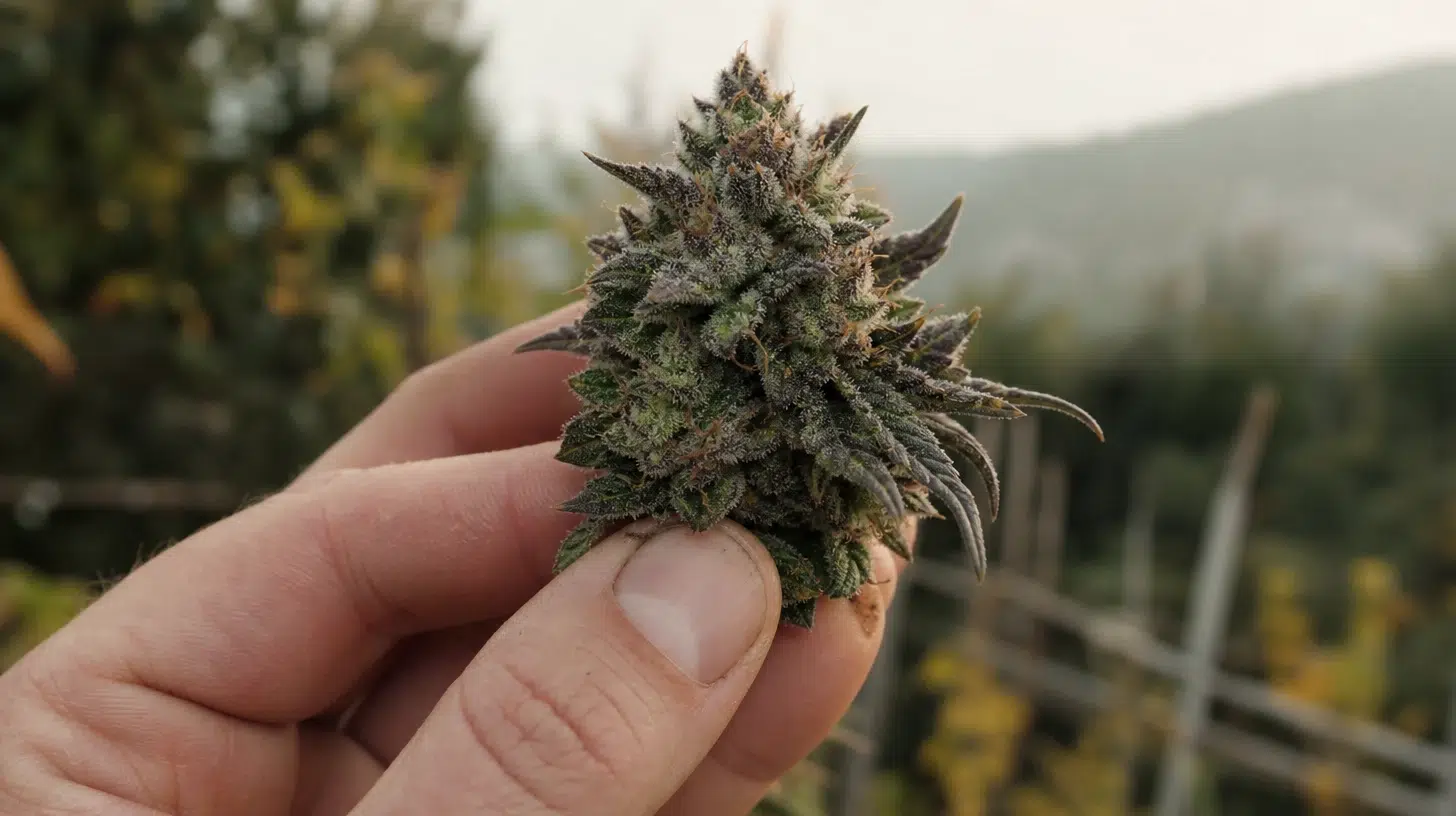

The CBD world has experienced a real boom in recent years, bringing to the market a multitude of flower varieties prized for their aromatic richness. Yet, when it comes to storing CBD flowers, many rely solely on the humidity level . However, this parameter only tells part of the story. To understand the subtleties that govern the stability and microbiological safety of CBD buds, we must delve into the concept ofwater activity (aW). This factor, little known to the general public but central to the food industry, plays a decisive role in the texture, longevity, and ability of a flower to preserve its aromas and beneficial properties during storage. In the following paragraphs, let's explore in detail why humidity level is only one of the key players in the winning trio: humidity, water activity, and storage conditions.
Differentiate between humidity level, relative humidity, and water activity
There is often confusion between moisture content , therelative humidity of the ambient air, andwater activity. However, these three concepts remain essential for properly preserving your CBD flowers and ensuring their freshness, while avoiding health risks related to mold and bacteria.
Moisture content simply refers to the proportion of water contained in a flower, usually expressed as a percentage of its total weight. Relative humidity, on the other hand, measures the proportion of water vapor present in the air compared to the maximum that can be retained at a given temperature. Between these two lies the concept of water activity (aW) : this value expresses the fraction of free water in the product, available for chemical and biological reactions, and therefore capable of supporting microbial growth.
What exactly does the humidity level consist of?
The moisture content of a CBD flower refers to the total amount of water present in the plant material. A harvested and dried flower can have a moisture content between 8% and 14%, depending on the drying method used, ventilation, and stage of maturation.
From a physical standpoint, reducing humidity significantly improves preservation. However, this provides no information about the "quality" of the water or its actual effect on the potential growth of microorganisms, such as molds.
What is the purpose of water activity (aW)?
Water activity (aW) is an index ranging from 0 to 1, corresponding to the ratio between the vapor pressure of the water in the bloom and the maximum pressure obtained with pure water at the same temperature. The higher the aW, the greater the risk of microbial growth .
Unlike humidity levels, water activity (aW) specifies what proportion of the total water is actually available to organisms: this is the so-called "free" water, mobilized for enzymatic reactions, fungal spore germination, or bacterial growth. Two flowers with similar humidity levels can therefore pose radically different risks if their water activities diverge.
Why don't two flowers with the same moisture content keep the same?
A common assumption is that any dried flower with, say, 10% moisture would offer the same guarantees of stability and food safety. In reality, the cell structure, the type ofairtight packaging used, or even the presence of sugars and fats directly impactwater activity.
For example, during rapid curing or drying processes, most of the surface water is removed while a fraction remains trapped within the plant mass, making it difficult for exchange. This uneven distribution alters the water activity (aW), modifying the flower's resistance to microbial agents.
Role of the flower's chemical composition
Terpene -rich resins , carbohydrate concentrations, organic acids, and proteins each influence how water circulates and binds within the floral structure. Thus, a dense, oily flower, brimming with powerful aromas, may sometimes retain more bound water, the actual activity of which will be less compared to that found in a more airy material with a low concentration of essential oils .
This diversity explains why the texture of the flowers, their ability to crumble easily or to retain a certain elasticity depend as much on the humidity level as on the quality of the remaining water, measured precisely via the aW.
Influence of storage conditions and airtight packaging
Airtight packaging , controlled storage temperature , and limiting exposure to air or oxygen play a crucial role in the evolution of water activity. Permeable packaging exposed to UV radiation and heat will allow water exchange with the environment and promote a rapid increase in water activity (aW), especially if the temperature fluctuates frequently.
Conversely, UV-resistant bags combined with a stable temperature of around 18°C, away from any heat source, stabilize the water activity, ensuring excellent preservation of CBD flowers . It is advisable to aim for an aW (water activity) ideally between 0.55 and 0.62: a buffer zone where mold growth remains very limited without excessively drying out the flower or causing it to lose its aroma too quickly.
Risks associated with poor water resource management
Neglecting water activity exposes users to various health and quality hazards. Even with a moisture level deemed acceptable by analysis, maintaining excessive water activity creates a fertile breeding ground for microscopic bacteria and fungi .
More specifically, the presence of even a few patches ofopen water quickly promotes the growth of molds that are barely visible to the naked eye but can already alter the taste and smell of the product. Some of these contaminants produce mycotoxins that are difficult to eliminate by simple combustion or vaporization.
The impact on the texture of the flowers and the pleasure of using them
Excess free water softens the material, limiting combustion during rolling or vaporizing and contributing to a significant loss of volatile terpenes. Paradoxically, too low an aW (water content) leads to drying, weakening the flower, accelerating the diffusion of aromas outside the packaging, and resulting in a crumbly texture.
Controlling the hygroscopic balance via the aW therefore makes it possible to combine ease of grinding, satisfactory density, power on the palate and respect for the original aromatic bouquet.
Consequences on the stability of terpenes and aromas
Any disruption towater activity leads to a more rapid evaporation of volatile compounds: terpenes, responsible for the aromas and scents typical of different CBD strains. Beyond their flavor, some of these terpenes also provide soothing or stimulating properties sought after by connoisseurs.
To enjoy a aromatic profile , avoid repeated exposure toair, oxygen, and especially large variations inrelative humidity around open jars. Always opt for a stable and controlled storage.
Measuring water activity: how to do it and what results to expect?
In the food industry, measuring water activity involves strict protocols using specialized electronic devices, which can be expensive for individuals. Professionals, however, regularly use this type of analysis when preparing batches for sale, thereby ensuring a clearer understanding of food safety levels.
Independent tests on various flower varieties reveal a significant disparity between products with similar moisture content. Depending on their origin, cultivation method, or curing process, some exhibited an optimal aw (water activity) around 0.57, while others sometimes exceeded 0.7 despite a similar moisture level. This variability necessitates rigorous monitoring for those aiming for the best user experience.
- For safe consumption, target an aW of less than 0.65.
- Avoid overly dry flowers with an aW below 0.48: they lack roundness and lose their aromas quickly.
- When in doubt, choose sealed and tested packaging rather than loose product exposed to airor UV light.
| Type of CBD flower | Humidity level (%) | Water activity (aW) |
|---|---|---|
| Classic outdoor flower | 11,5 | 0,62 |
| Premium indoor flower | 10,8 | 0,59 |
| Freshly trimmed flower | 13,4 | 0,71 |
| Aged/dried flower | 7,6 | 0,49 |
These values illustrate howwater activity remains the essential indicator, usefully complementing the sole reading of humidity levels to predict the quality and shelf life of CBD flowers.
How to measure water activity at home?
Water activity is measured using a specialized device called an aw-meter, which assesses the localized vapor pressure. The cost remains quite high, limiting its use at home. Some laboratories offer ad-hoc analyses for professionals and specialty shops. In the absence of precise measurements, monitoring the freshness and texture of the flowers and choosing reinforced bags is a good alternative.
- Check the airtight packaging, avoid UV rays, store away from heat.
- Use bags with a moisture-regulating disc.
What are the signs that a flower contains too much free water?
Bud that's too moist takes on a spongy texture, sticks to your fingers, and becomes difficult to crumble or grind. It may also develop slightly sour or musty aromas, indicating the presence of contaminants invisible to the naked eye. Condensation on the packaging after opening is also a warning sign.
- Sticky texture, presence of filaments or white/grey dust (mold).
- Abnormal odor, sometimes acrid or sour.
Why favor a moderate humidity level combined with low water activity?
A good balance slows the deterioration of aromas, protects against microbial growth, and provides even combustion. An aW around 0.60 ensures an ideal texture and minimizes the loss of terpenes and cannabinoids, extending shelf life while optimizing the sensory experience.
- Less mold, increased microbiological stability.
- Accurate description of aromas/smells and respect for the original flavors.
What simple measures can be taken to maximize conservation?
Ensure airtight packaging, minimize air exchange, limit exposure to direct light, and store between 15 and 21°C away from any heat source: this significantly reduces fluctuations in relative humidity and storage temperature. Regularly monitor the appearance and smell of the flowers to detect any abnormal signs.
- Store in a tinted glass jar or a special airtight plant bag.
- Add a small moisture-regulating absorber.
- Store away from air, UV rays and temperature variations.

Co-founder of CBD.fr
Julien Cordobes is the editor of CBD.fr. Born in 1978 in the Paris region, he first trained in e-commerce before turning to natural health approaches, a dual perspective that now structures his way of writing about cannabidiol: reading the scientific literature as it is, without hardening the conclusions, and presenting it in a language that everyone understands.
He discovered CBD at a time when the French market was developing faster than the information available to it. He acquired CBD.fr in 2022 and then took on editorial responsibility for the blog. Since then, he has published numerous articles covering the daily use of CBD, the interpretation of laboratory analyses, the evolution of the legal framework, and precautions for use.