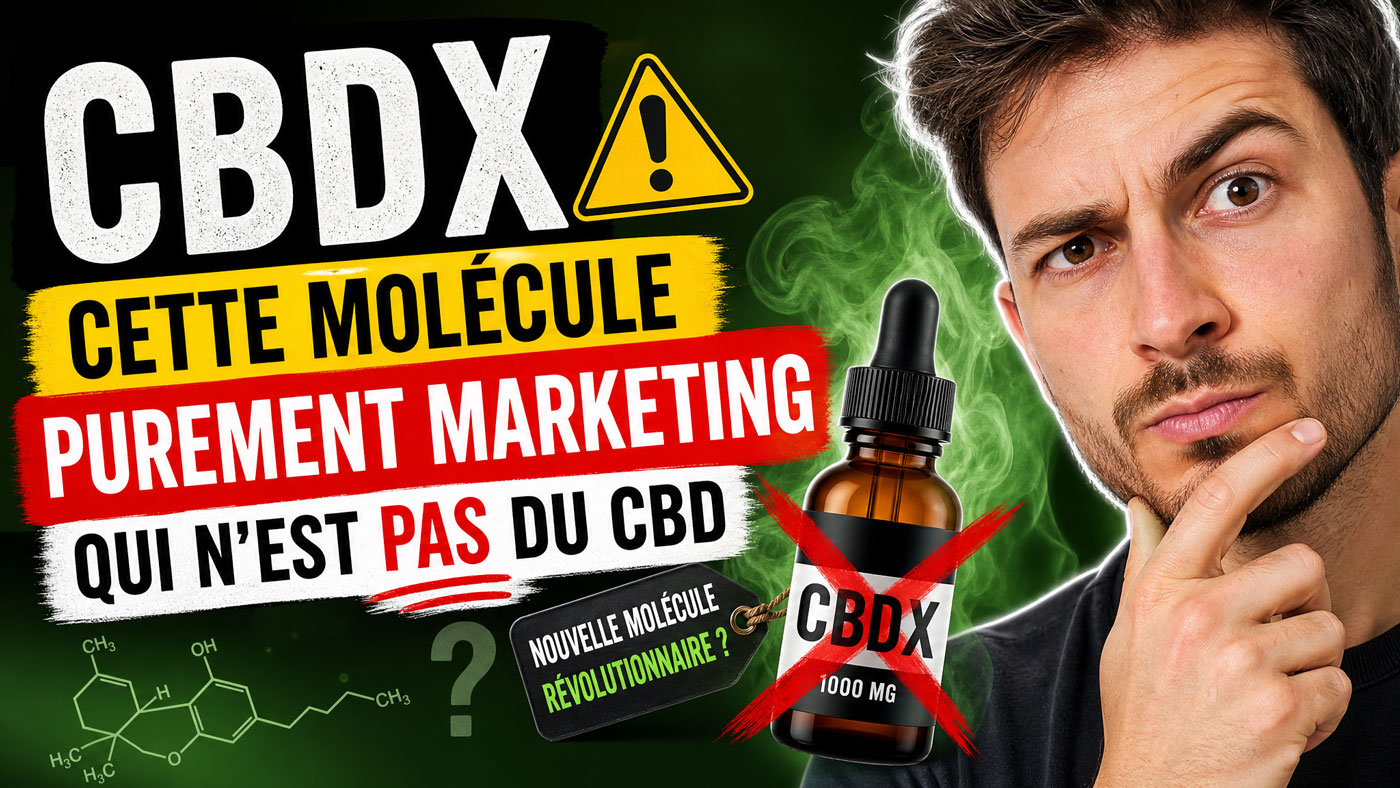

For the past few years, new trends surrounding cannabis for wellness have been fueling the market with an increasing number of derivative products. One term, however, is starting to confuse consumers: CBDX. This name is intriguing, promising effects similar to traditional CBD, while blurring the line between regulation and innovation. Should we see this as a genuine breakthrough, or is it simply a marketing concept without any scientific basis? Let's take a closer look at this semi-synthetic molecule , which has nothing in common with natural CBD.
What CBDX really is
CBDX has recently emerged in the world of wellness cannabis , often presented as an innovative cannabinoid derived from hemp. However , behind this new name lies a chemical composition distinct from classic cannabidiol. Unlike CBD extracted naturally from hemp , CBDX is primarily the result of transforming molecules through structural modification in the laboratory.
Most manufacturers maintain a degree of secrecy regarding the exact formula of CBDX. It's often described as a semi-synthetic molecule created through a process designed to achieve specific properties. This "pure marketing" aspect immediately raises questions about its true origin and its genuine connection to natural cannabinoids.
Key differences between CBD and CBDX
Comparing CBD and CBDX begins with examining their origin. While CBD comes directly from the hemp plant through various plant extraction methods, CBDX relies on much more extensive human intervention.
Several major distinctions emerge when examining the chemical, physiological , and regulatory of these two substances. To delve deeper into the question of legal cannabinoids with unique properties, there are compounds like THCBD, whose characteristics differ significantly from classic CBD.
| Characteristic | CBD | CBDX |
|---|---|---|
| Origin | Natural hemp extraction | Synthesis or transformation in the laboratory |
| Legal status | Legal under certain conditions (depending on country/region) | Grey area, often unregulated |
| Psychoactive effects | No psychoactive effects noted | Uncertain or poorly documented |
| Compliance with legislation | Under strict control of THC | Not recognized by the authorities |
- CBD benefits from significant scientific and medical research.
- CBDX been the subject of any serious publications or independent clinical studies to date.
Data on chemical composition
The molecular structure of CBD is now fully understood. It belongs to the family of phytocannabinoids naturally present in cannabis. However CBDXprecisely describes its chemical composition, further fueling doubts about the product's legitimacy.
It is also worth noting that some legal cannabinoids derived from hemp, such as thcbd, have very different profiles from lab-made cbdx.
Points to be aware of for the consumer
For users seeking the recognized benefits of CBD, turning to CBDX carries several real risks. First, the lack of validated studies deprives the public of reliable benchmarks regarding safety and long-term tolerability. Furthermore, the ambiguity of its origins can lead to the presence of undesirable residual compounds from the synthesis process.
By positioning itself as an alternative without solid scientific evidence, CBDX may mislead those seeking the benefits of a cannabinoid with well-known properties. Instead of offering a clear promise, this new molecule plays on the confusion created by its linguistic similarity to the word CBD.
Legality, regulation and effects of CBDX
While CBD has been legalized under various conditions in many countries, each stage of production is subject to strict regulations. The source must be identified, the THC level controlled, and each batch monitored to ensure safety.
CBDX , on the other hand, operates in a completely gray area. Not being explicitly mentioned in regulations nor analyzed by health authorities, it escapes the usual checks imposed on cannabis-derived products . Some distributors are trying to exploit this to promote CBDX , but caution is advised to avoid any legal or health complications.
Potential impact on health
In the absence of independent scientific publications on CBDX, discussingpsychoactive effects remains risky. Nothing officially confirms any positive or negative influence on the body, unlike CBD , whose gentle action and lack of euphoric effects are now well established.
Any cannabinoid of dubious origin can present unforeseen risks: pollutants from the synthesis process, drug interactions, lack of health certification. The precautionary principle is therefore essential, especially concerning a semi-synthetic molecule with limited documentation such as CBDX.
What does European regulation say?
In Europe, only certain molecules derived from hemp and containing trace amounts of THC are permitted in the legal composition of finished products. CBDX, being absent from official lists and not classified as an authorized ingredient, automatically falls outside the regulatory framework.
The marketing of cbdx therefore exposes both sellers and consumers to significant uncertainties: potential seizures, recalls of batches, or even prosecution in the event of a proven problem or undeclared side effects.
Frequently asked questions about CBDX and the differences between CBD and CBDX
How to differentiate between CBD and CBDX in a cannabis-derived product?
- Check the detailed labeling, which must mention the active molecule (natural cannabidiol or other modified form).
- Consult the technical data sheet or request an independent certificate of analysis.
- Beware of vague references to “next generation” cannabinoids.
Transparent products always display a traceable batch number and precisely list the chemical composition.
Does CBD have psychoactive effects similar to those of THC?
No official documentation confirms that CBDX has psychoactive effects comparable to those of THC . The few published user reviews remain anecdotal and do not replace scientific validation.
- There is a complete lack of evidence regarding its long-term safety.
- Possibility ofunexpected effects related to the manufacturing process.
| Molecule | Established psychoactive effect |
|---|---|
| CBD | No |
| CBDX | Unknown |
What is the legal status of CBD in France and Europe?
Currently, CBDX is not included on any official list of authorized substances in France or Europe. Its sale therefore falls outside the legal framework, exposing both suppliers and consumers to potential risks.
- No official status with regulatory agencies.
- Product often considered to be non-compliant with health recommendations.
- Risk of immediate withdrawal in case of a report or inspection.
What advice would you give to a user hesitating between CBD and CBDX?
It is best to choose natural CBD products that have undergone extensive clinical research and have clear legal recognition. Opting for CBDX , which lacks scientific precedent and a precise legal framework, involves an unprecedented risk for the informed consumer.
- Always inquire about the precise composition of the extracts you purchase.
- Never hesitate to request analyses from an accredited laboratory.
- Avoid any semi-synthetic molecule not validated by independent medical research.

Editor-in-Chief specializing in CBD
Julien, born on July 17, 1978, in the Paris region, is a prominent writer and expert in the field of CBD products. Following his studies, Julien developed a passion for natural remedies, including CBD. In 2022, he joined the CBD.fr team as an expert and regular contributor. Thanks to his scientific expertise and clear writing style, Julien helps demystify the complexities of CBD, while highlighting its benefits and potential applications through his articles and conference presentations.