
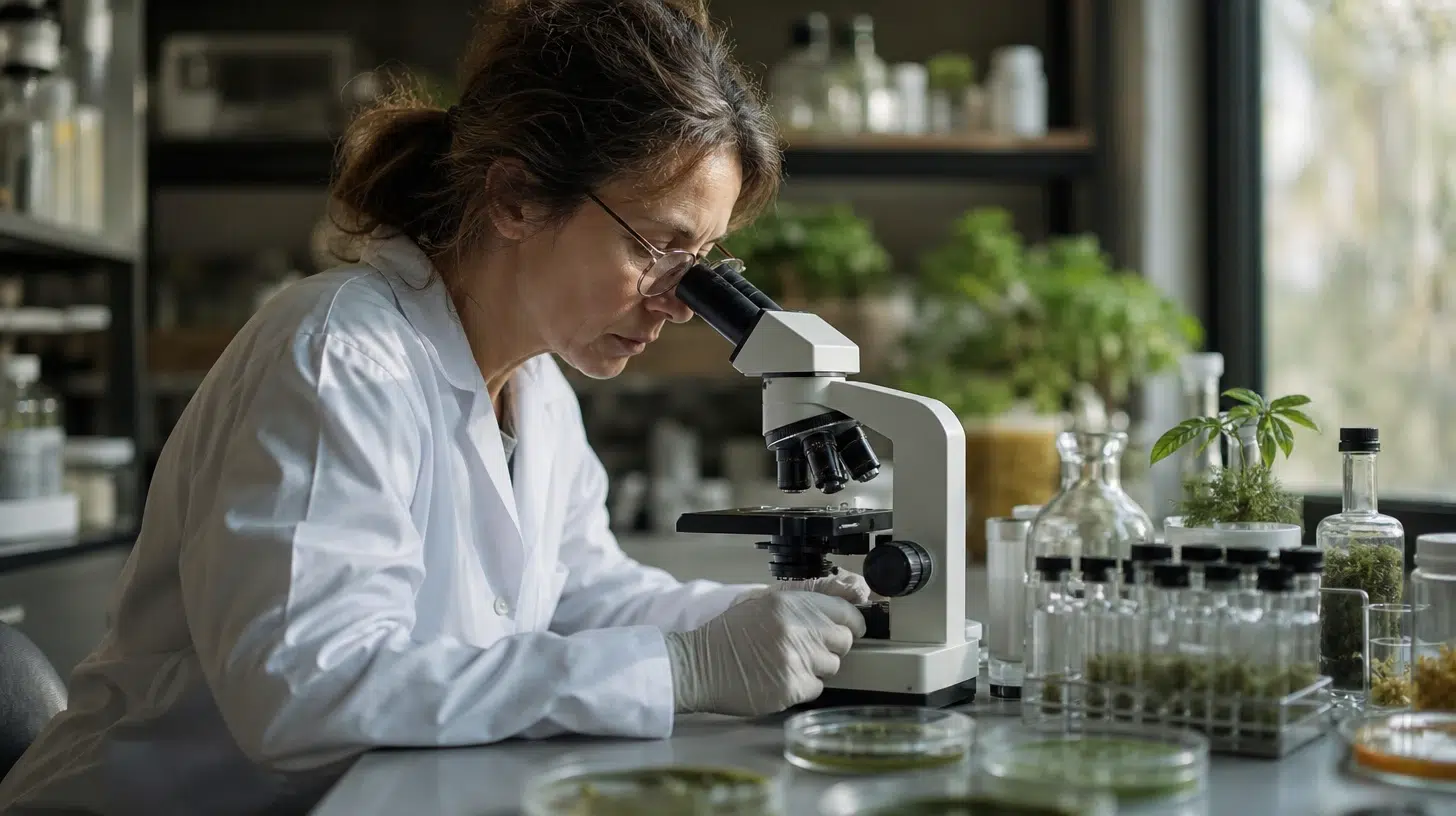

The world of legal cannabis is evolving rapidly, driven by innovation and a growing demand for quality. Industry players are taking a keen interest in microbiology , as controlling soil and production microorganisms directly influences the safety and efficacy of THC legal CBD and products . Two main approaches coexist for monitoring and analyzing microbial populations: traditional plate culture techniques and DNA analysis via real-time PCR and other molecular methods. These tools are central to modern microbial analysis strategies , each with its own advantages, limitations, and specific applications. Understanding why the question of the accuracy and relevance of each approach becomes crucial when addressing pathogen detection , microbial biosynthesis , and quality control in the wellness cannabis sector is essential.
Traditional culture: understanding its principles and limitations
Traditional culture techniques have been used for over a century to analyze microorganisms present in a substrate or on a finished product. They involve isolating microorganisms on solid or liquid nutrient media, usually Petri dishes filled with agar, and then observing their growth. Identification relies on morphological, biochemical, and sometimes enzymatic criteria.
This process is appealing due to its simplicity and affordability. It allows for obtaining a sufficient quantity of live cells to perform further tests, particularly those related to the enzymes responsible for cannabinoid production or to assess the impact of soil microorganisms on the plant. To guarantee product safety, it is also essential to consult a reliable certificate of analysis . However, behind this apparent simplicity, several weaknesses emerge, especially when it comes to quickly and reliably identifying quality control methods adapted to current requirements
The phenomenal invisible diversity of microbial communities
A major difficulty with plate culture lies in the limited representativeness of the true diversity of microorganisms . According to various qualitative studies, less than 1% of the species present in a given medium are cultivable with standard media. The remainder escape traditional examination. This poses a problem when one wishes to precisely map all the bacteria, fungi, or yeasts active in microbial biosynthesis processes , or to search for emerging pathogens .
Furthermore, some microorganisms are intolerant of oxygen, prefer different temperatures, or enter so-called "viable but uncultivable" phases. In this case, they still possess enzymatic capabilities, but without observable proliferation in culture plates. Thus, the technique tends to underestimate, or even ignore, crucial candidates for health or the quality of extracts rich in CBD, THC, and other molecules of therapeutic interest.
What types of pathogens might be missed?
Among the agents that can go undetected are numerous filamentous fungi (such as Fusarium or Alternaria), certain spore-forming or acidophilic bacteria, and plant viruses associated with the cannabis plant. Their presence will not necessarily be indicated by a culture, even if it negatively affects the harvest or alters the analysis of the final cannabinoids
In a context of strict food safety regulations, failing to identify these organisms can lead to product recalls or expose consumers to risks. The variety of scenarios therefore means that traditional techniques are only partially adequate to meet the quality requirements of modern CBD.
Strengths and weaknesses of traditional culture
The following list summarizes the strengths and limitations of conventional microbial cultures :
- Allows the isolation and study of living and active microorganisms on certain known media.
- Simple to implement, economical and easily integrated into routine laboratory work.
- It detects only a tiny proportion of the microbial reality.
- High risk of false negatives in the case of stressed bacteria, dormant spores or strict anaerobic organisms.
- It can sometimes take several days to get a usable response.
Real-time PCR and DNA analysis: towards a new standard?
The advent of so-called "molecular" technologies has profoundly changed the landscape of cannabis microbiology. Real-time PCR, or polymerase chain reaction, allows for the rapid targeting and amplification ofDNA (or RNA) . This provides access to a much broader and more detailed picture of the communities present in an extract or on a surface, whether they are active or not and can be cultured on culture plates.
In addition to the increased speed and reliability of the methods,DNA analysis allows for relative quantification, precise differentiation between closely related species, and even direct identification of strains capable of influencing cannabinoid production via their enzymes. This represents enormous potential when it comes to optimizing the microbial biosynthesis of CBD or THC, or simply monitoring the contamination of plant material during production.
The fundamental principle of real-time PCR
PCR uses specific primers that target precise regions of microbial DNA . After extracting total DNA from a sample, it is amplified, and then the generated fluorescence is measured in real time, reflecting the initial quantity of the gene of interest. This approach allows for highly sensitive and automated analyses.
Adopting PCR forCBD microbial analysis also provides the ability to simultaneously detect multiple pathogens, a valuable flexibility in an environment where rapid response is crucial. Specialized laboratories also generate constantly updated databases, allowing protocols to be adjusted according to local strains or emerging health threats.
Why doesn't DNA detection systematically indicate the presence of a living organism?
A crucial point to keep in mind concerns the scope ofDNA analysis. Detecting a genetic fragment does not guarantee that the microorganism is alive, nor capable of interacting with the cannabis plant or producing enzymes necessary for the transformation of cannabinoids.
DNA can originate from recently dead cellsor dormant spores lacking immediate metabolic activity. To complement the molecular approach, some researchers choose to combine PCR with viability tests, such as adding intercalating agents that block the amplification of dead DNA. This strategy greatly refines the interpretation of results and prevents misinterpretations.
Practical comparison of the two methods
To better understand the key complementarities and differences, here is a comparative table of the main criteria applied to microbial monitoring in CBD production .
| Method | Time frame for results | Representation of diversity | Live/dead detection | Sensitivity | Cost/Accessibility |
|---|---|---|---|---|---|
| Traditional culture | 2 to 7 days | Low (cultivable organisms only) | Only living or active | Medium to low | Advantage: Low cost |
| PCR/DNA Analysis | 1 to 24 hours | Very high (the entire community, including non-cultivable areas) | Living and dead (except for viability test adaptations) | Very high | Limitation: Higher cost, training required |
It is clear thatmolecular analysis is gaining traction for the rapid detection of contaminants, traceability, and monitoring of microbial biosynthesis during the development of new extracts rich in CBD, THC , and other molecules. However, it can overestimate risk due to the cumulative detection of residual DNA, whereas cell culture specifically targets viable cells.
How does real-time PCR differ from a conventional plate analysis?
Real-time PCR identifies and amplifies the specific DNA or RNA of target microorganisms, enabling it to detect agents invisible to traditional culture. While plate analysis selects only live microorganisms capable of growing under standardized conditions, PCR also detects those that are not cultureable or whose growth requires complex media.
- Time to obtain a result: a few hours for PCR, several days for culture.
- Much wider detection range for molecular analysis.
- Increased sensitivity through the amplification of genetic information.
Can DNA analysis be used to optimize CBD production?
Yes, the study of the microbiome by DNA analysis makes it possible to select or exclude certain microbial strains influencing microbial biosynthesis, the release of enzymes useful for the production of cannabinoids, or even protection against soil pathogens.
- Monitoring of beneficial flora and potential contaminants.
- Optimizing conditions to boost the desired cannabinoid analysis profile.
- Better anticipation of health risks for each batch.
How can we know if a microorganism detected by PCR is actually dangerous?
PCR only indicates the presence of DNA, not the viability of the microbe. A second culture test, called a "confirmatory test," or the addition of discriminating agents during DNA extraction, can determine whether the pathogen in question is active or passive. Assessing the risk therefore requires a combination of techniques to avoid overly restrictive or unnecessary decisions.
- Confirmation by culture on a specific medium.
- Enzyme tests to measure actual activity.
How much does molecular analysis cost compared to a conventional culture?
PCR DNA analysis is generally more expensive than traditional culture, primarily due to the specialized equipment and technical expertise required. However, this expense is offset by the speed, extreme sensitivity, and ability to simultaneously process multiple organisms or genes of interest, which is becoming crucial in the dynamic CBD ecosystem.
| Method | Relative cost | Time frame for results |
|---|---|---|
| Traditional culture | Weak | Raised (several days) |
| PCR/DNA Analysis | Moderate to high | Low (a few hours to a day) |

Co-founder of CBD.fr
Julien Cordobes is the editor of CBD.fr. Born in 1978 in the Paris region, he first trained in e-commerce before turning to natural health approaches, a dual perspective that now structures his way of writing about cannabidiol: reading the scientific literature as it is, without hardening the conclusions, and presenting it in a language that everyone understands.
He discovered CBD at a time when the French market was developing faster than the information available to it. He acquired CBD.fr in 2022 and then took on editorial responsibility for the blog. Since then, he has published numerous articles covering the daily use of CBD, the interpretation of laboratory analyses, the evolution of the legal framework, and precautions for use.


How do professionals integrate these tools?
Wellness-oriented cannabis producers often combine both methodologies to strengthen their quality assurance processes. This combination benefits from both the responsiveness of molecular tools and the ability of traditional methods to certify the viability of a suspected contaminant.
For example, rapid real-time PCR testing can detect the potential presence of a pathogen. If necessary, targeted culturing will confirm its infectiousness and guide appropriate measures. This ongoing dialogue between innovation and experience ensures consumer safety while promoting responsible production that respects both regulatory constraints and the desired medicinal value of CBD .