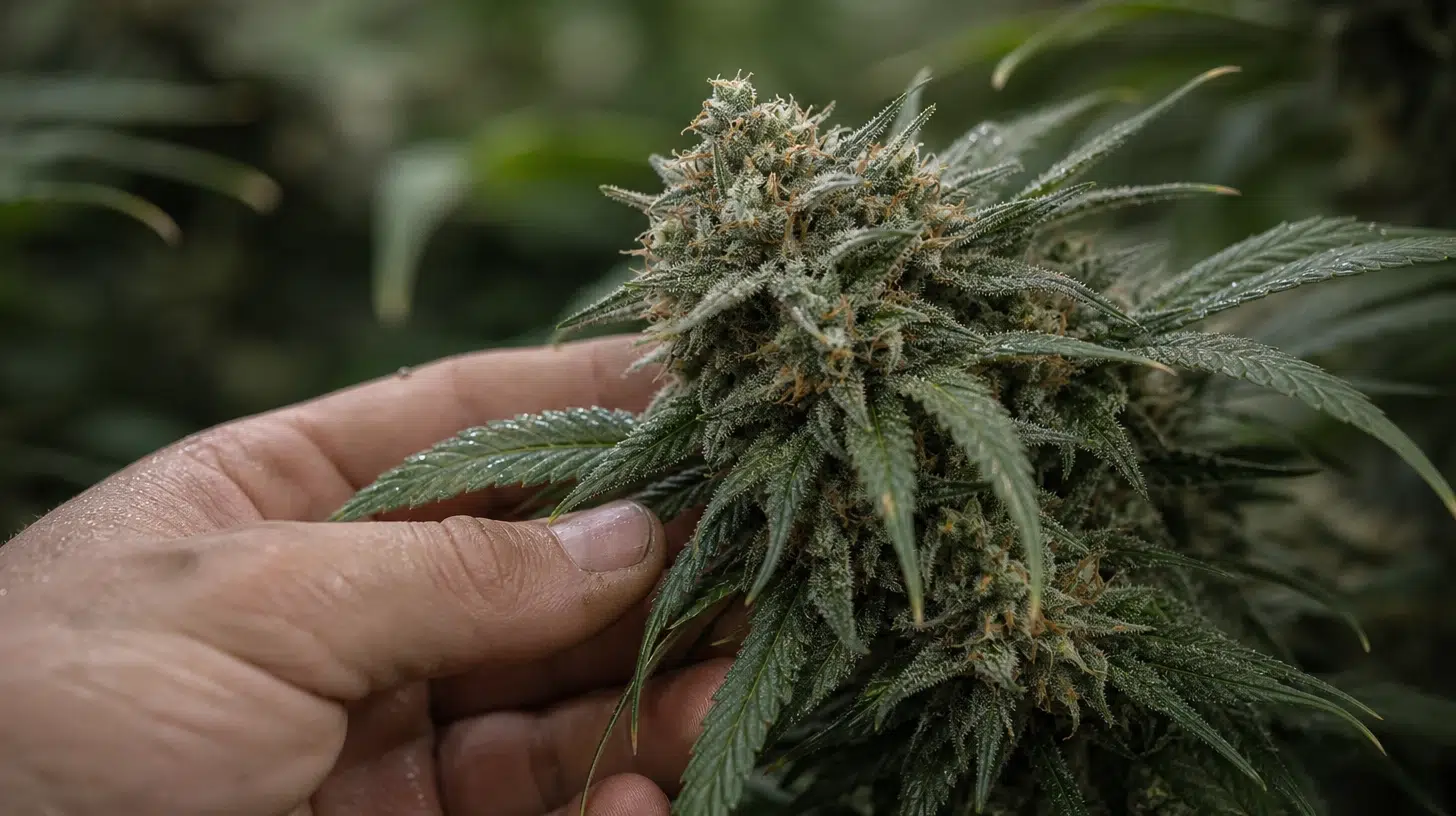

The world of CBD is as intriguing for its diversity as for the botanical complexity behind each variety. Among the recurring themes for both growers and seasoned enthusiasts is a central question: why are there such marked differences in the density of CBD flowers depending on the strain? This characteristic, at the heart of the sensory experience, results from a complex interplay between cannabis genetics, plant physiology, and interactions with the environment. Let's explore together the main natural mechanisms behind compact or airy inflorescences, and the key role played by varietal selection.
Understanding floral density in CBD cannabis
The density of the flowers, meaning their compactness, depends primarily on theplant's anatomy and the genes carried by each genetic lineage. It's interesting to note that genetics also influences how each individual reacts to CBD, as explained in this article on differences in CBD sensitivity. Therefore, simply observing the appearance of a CBD bud isn't enough to predict its origin or effects; several levels of understanding are necessary to grasp what shapes the flower.
Through natural and then human selection, various genetic mutations have shaped floral morphology, apical dominance , and the ratio between main stems and secondary branches. These variations directly guide plant development, determining the size, structure, distribution, and final density of female flowers.
Genetic factors influencing the architecture of CBD flowers
Cannabis genetics are the cornerstone of the formation of dense or loose buds. Generations of deliberate selection have stabilized certain traits: strong apical dominance , reduced distance between nodes, or a particular angle of lateral branches – characteristics sought after in the majority of CBD varieties marketed today.
These factors are not isolated but interact throughout the vegetative cycle, modulating the cannabinoid profile, the distribution of female flowers and even the natural resistance to external aggressions.
Apical dominance and vertical organization
Some genotypes exhibit apical dominance : they concentrate growth on the central axis, favoring the formation of a main bud supported by a few smaller secondary buds. This phenomenon is typical of classic "sativa" strains, but it is also found in many modern CBD varieties.
A apical dominance often allows for optimal stacking of the calyxes around the main stem, significantly increasing the density and mechanical integrity of the main flower. Conversely, cultivars with less assertive apical authority have their energy distributed among several secondary axes, resulting in more numerous, often less compact, flowers.
Internodal length and floral morphology
The distance between two consecutive nodes, called internode length, directly influences the overall shape of the buds. A plant with short internodes will generally have tighter flower clusters, a distinctive sign of increased density. This parameter is genetically determined, although the environment can slightly modulate this attribute.
By comparison, varieties with widely spaced internodes will produce abundant but airy inflorescences, typical of certain old lines or varieties adapted to humid climates, where air circulation takes precedence over floral robustness.
Branching and structure of the inflorescences
Another fundamental determinant in the development of CBD plants lies in their branching capacity . The more strong secondary branches a plant has, the more it tends to produce multiple flowers, sometimes at the expense of the volumetric concentration of each individual bud.
However, some CBD strains possess the ability to express both a dense branching network and compact flowers. This often results from selective breeding aimed at combining vegetative vigor, high yield, and an aromatic quality appreciated during consumption.
Floral morphology and specific mutations
While the basic anatomy of cannabis remains stable across the species, the existence of mutations introduces a whole range of possible variations: hypertrophied calyxes, closely spaced bracts, or exuberant trichome development. All of these factors influence not only the visual and tactile density of the flower, but also the cannabinoid profile that will develop during maturation.
Several genomic families share these beneficial mutations, inherited from selective crosses – between industrial strains adapted to CBD and parents from rare or ancestral gene pools.
Environmental impact and growing conditions
Although cannabis genetics largely define the initial structure of the plant, environmental parameters can enhance or diminish flower density. Light, fertilization, controlled water stress, and training techniques all play a role in the actual phenotypic expression.
The variations encountered from one harvest to another testify to this permanent synergy between heredity and adaptation: a genetic line, however stable it may be, only fully reveals its density/flower potential if it benefits from a suitable growing environment.
Light and the light spectrum
Optimal light stimulates photosynthesis and encourages nodal contraction, while insufficient light can lengthen internodes and make buds more open. The choice of light spectrum —a recent development in indoor growing—also modulates the balance between moisture removal and stimulation of floral development.
Some recent LED lamps perfectly mimic seasonal solar cycles, creating conditions conducive to obtaining beautiful compact inflorescences , worthy of modern high-performance strains
Nutrients, stress and water management
Appropriate mineral nutrition optimizes purely floral metabolism: calcium, potassium, and micronutrients strengthen tissues, thicken cell membranes, and facilitate the abundant production of pistils and trichomes. Any imbalance slows down the process, making incomplete or disordered maturation of female flowers possible .
Careful irrigation management and occasional mild water stress naturally promote compactness without compromising aromatic quality or cannabinoid profile stability. However, the initial genetics remain the predominant factor, even more so than external conditions.
Flower density: concrete examples of variation according to genetic lineage
To concretely illustrate the impact of cannabis genetics on CBD inflorescence density, let's compare different typical profiles observed on modern strains/varieties.
Each genetic family generates a particular signature: pyramidal structure in “skunk” descendants, ultra-compact bouquets for many Afghan-dominant “indica”, threadlike inflorescences in old-school “sativa” style, or mixed buds resulting from recent crosses combining productivity, density and a cannabinoid profile .
- Compact varieties: mainly derived from indica parentage, they form dense buds with short internodes and a pronounced apical dominance.
- Airy varieties: predominantly sativa-based, they express weak apical dominance and long intercalary spaces, adapted to humid environments.
- Hybrid strains: combine the structural advantages of the two major groups, resulting in flowers that are often perfectly balanced between compactness and internal ventilation.
| Genetic lineage | Flower density | Dominant morphology |
|---|---|---|
| Pure Indica | Very high | Pyramidal, compact |
| Pure Sativa | Low to medium | Lying down, well-ventilated |
| Modern CBD hybrid | Raised to very high | Mixed, often rounded and dense |
This table highlights how, for each targeted cross, genetic composition directs density, while cultivation techniques will be chosen to enhance these innate advantages.
What genetic traits promote particularly dense CBD flowers?
Flower density depends primarily on apical dominance, short internodal length, and certain genetic mutations that produce larger calyxes. Modern varieties have been selected to combine these traits and offer more compact and resilient buds. Lines with a strong indica parentage exhibit these tendencies more pronouncedly.
- Domination of a robust central stem
- Short internodes
- Thick, closely spaced bracts
- Cannabinoid profile adapted to the CBD market
How does the environment influence the final density despite genetics?
While genetics lays the foundation, climate, light quality, nutrition, and cultivation techniques either optimize or hinder a variety's natural potential. A well-controlled environment improves the compactness of the inflorescences, while unfavorable conditions resulted in flowers that were less dense than expected.
- Intense light, especially during flowering
- Nutrition specific to the floral stage
- Ventilation and humidity control
- Mild water stress under control
Why do some CBD varieties still have less compact flowers?
Some strains are intentionally selected to produce slightly airy flowers: better tolerance to mold in humid climates, aesthetic preference, or reduced risks during transport. Furthermore, market demands and the genetic makeup of the parent plants explain the wide variety of morphologies observed.
- Adaptation to open field cultivation
- Increased natural resistance to humidity
- Diversity of consumer preferences
Is there a direct link between flower density and the cannabinoid profile of a variety?
There isn't necessarily a strict correlation between flower density and CBD levels or terpene balance. However, denser flowers tend to accumulate more resin, which promotes the concentration of cannabinoids and terpenes during the development of modern CBD plants.
| Density | CBD content | Rich in aromas |
|---|---|---|
| High | Supported | Robust & complex |
| Average | Variable | Subtle |
| Low | Smaller, but homogeneous | Lightweight |

Co-founder of CBD.fr
Julien Cordobes is the editor of CBD.fr. Born in 1978 in the Paris region, he first trained in e-commerce before turning to natural health approaches, a dual perspective that now structures his way of writing about cannabidiol: reading the scientific literature as it is, without hardening the conclusions, and presenting it in a language that everyone understands.
He discovered CBD at a time when the French market was developing faster than the information available to it. He acquired CBD.fr in 2022 and then took on editorial responsibility for the blog. Since then, he has published numerous articles covering the daily use of CBD, the interpretation of laboratory analyses, the evolution of the legal framework, and precautions for use.