
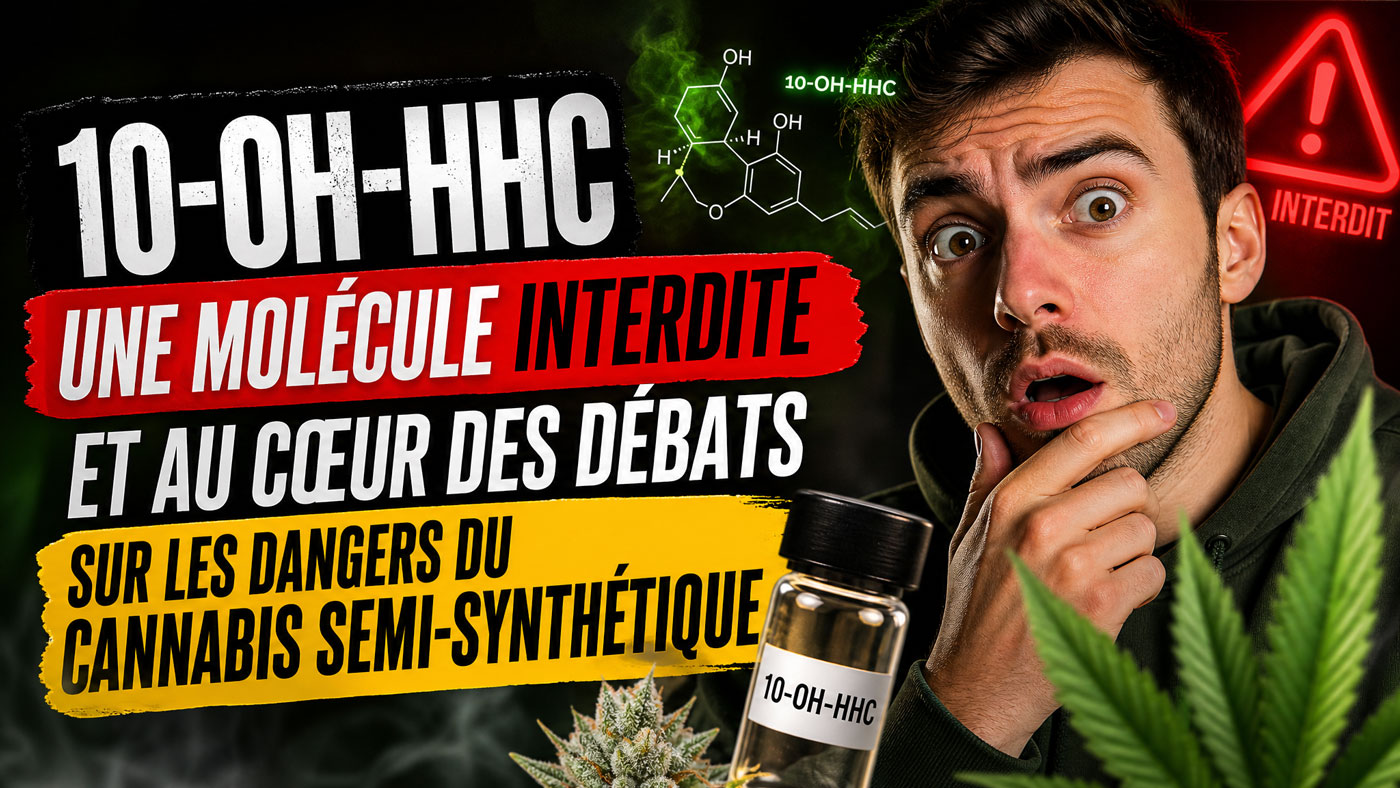

Since the emergence of semi-synthetic cannabinoids , the debate surrounding their legality and the dangers associated with their consumption has steadily intensified. The molecule 10-OH-HHC , long overlooked, is now attracting the full attention of European health authorities, particularly the ANSM (French National Agency for Medicines and Health Products Safety) . Numerous experts are raising the alarm about its potent psychoactive effects , unstable chemical composition , and potential to induce intoxicating effects . Banned from 2026 in France and several other countries, this molecule is now the focus of concern regarding alternatives to traditional HHC
What is 10-oh-hhc?
10 -OH-HHC belongs to the class of semi-synthetic cannabinoids resulting from extensive chemical modifications of HHC (hexahydrocannabinol). While HHC had already generated controversy due to its like properties THC-, its hydroxylated version – 10-OH-HHC – goes even further in terms of modifying its molecular structure, resulting in increased potency.
In practical terms, the difference lies partly in the chemical composition. Adding a hydroxyl (OH) group to the tenth position of the hexagonal ring radically alters the profile of psychoactive effects. This results in a different affinity for the CB1 and CB2 receptors of the human endocannabinoid system, thus explaining the sudden increase in reports ofserious adverse effects.
Dangers and psychoactive effects associated with 10-oh-hhc
What are the effects felt with 10-oh-hhc?
Many users report sensations similar to those experienced with major narcotics, such as intense euphoria, but also episodes of anxiety, mental confusion, and persistent drowsiness. Few publications address the precise dosage of this product, as significant variations exist depending on the synthesis method used in clandestine laboratories.
Some side effects include severe dizziness, and even cardiovascular or respiratory problems in sensitive individuals. Uncertainty often surrounds the chemical composition of illicitly distributed batches, exacerbating the dangers associated with improvised consumption. Following the ban on other cannabinoids in France, it is worth examining the reactions of CBD shops to the HHC ban.
What are the short and medium-term health risks?
Recent clinical data show a higher potential for addiction than that of classic hhc. Health authorities are noting an increase in emergency room admissions for intoxications from semi-synthetic cannabinoids , including 10-oh-hc, in several European countries.
TheANSM ( French National Agency for Medicines and Health Products Safety) warns against the use of uncontrolled substances, emphasizing that only strict legal regulation can limit health impacts. The accumulation of scientific evidence on acute and chronic toxicity is now pushing towards a firm ban on the molecule, effective from 2026. Recently, several similar substances, such as THCP, have also become subject to strict regulation: THCP is banned.
Legality and regulatory framework surrounding the ban on 10-oh-hhc
Why will 10-oh-hhc be banned in 2026?
The rapid rise of semi-synthetic cannabinoids has posed an unprecedented challenge to French and European regulatory bodies. Faced with the explosion of illicit sales and the lack of toxicological data, the ANSM (French National Agency for Medicines and Health Products ) has proposed a total ban on 10-OH-HHC based on independent scientific recommendations.
As of January 2026, the classification of the molecule as a narcotic will officially come into effect in France. This decision aims to anticipate any major health risks and to harmonize legislation with that adopted by other members of the European Union.
What impact will the ban have on the market?
The official halt to the sale and manufacture of 10-oh-hhc will disrupt the current supply, prompting some laboratories to seek other alternatives to hhc to meet the growing demand for new cannabis derivatives.
These rapid mutations are worrying addiction vigilance specialists , who fear the emergence of even less studied molecules that could represent greater dangers for the adult and adolescent population
Alternatives to hc: what solutions are there in the face of the ban?
The tightening of legislation naturally raises questions about the possibilities of legal and safer alternatives. Some alternatives to HHC, primarily focused on CBD, continue to be explored, classified among cannabinoids with significantly less pronounced effects and no intoxicating properties.
Natural extracts or certain CBD-rich varieties are now emerging as credible options for those seeking well-being without the risks associated with 10-OH-HHC . These products have a more controlled chemical composition and a significantly lower risk profile .
- CBD-based infusions
- Low-THC hemp resins
- e-liquids without questionable additives
- Extracts meeting European standards
| Molecule | Psychoactive effect | Legality in 2026 |
|---|---|---|
| 10-oh-hhc | Very high | Forbidden |
| hhc | Pupil | Forbidden |
| CBD | Negligible | Allowed |
Frequently asked questions about 10-OH-HHC, its legality and precautions
What are the main dangers associated with the consumption of 10-oh-hhc?
- Increased cardiovascular risks
- High potential for addiction
- Perceptual disturbances and mental confusion
Will the legality of 10-oh-hhc change everywhere in Europe by 2026?
Is there a dosage considered safe for 10-oh-hhc?
- Lack of purity standards
- Significant variability in effects between batches
What alternatives to hhc should be favored after the ban?
- CBD-rich hemp flowers
- E-liquids formulated without HHC or harmful variants

Editor-in-Chief specializing in CBD
Julien, born on July 17, 1978, in the Paris region, is a prominent writer and expert in the field of CBD products. Following his studies, Julien developed a passion for natural remedies, including CBD. In 2022, he joined the CBD.fr team as an expert and regular contributor. Thanks to his scientific expertise and clear writing style, Julien helps demystify the complexities of CBD, while highlighting its benefits and potential applications through his articles and conference presentations.


