
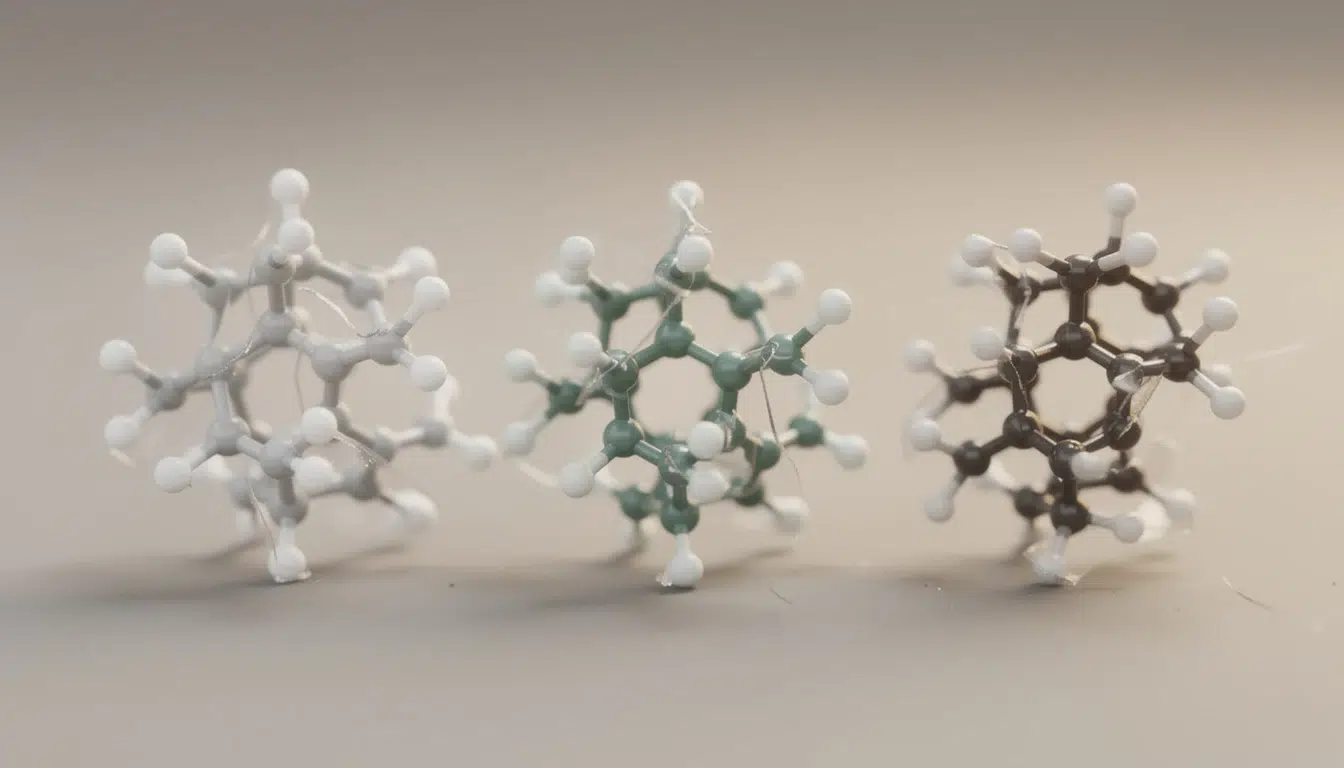

In recent years, the rapid emergence of synthetic cannabinoids and neo-cannabinoids has revolutionized the legal cannabis market. Behind technical names like 10-OH-HHC, THCP , or H4CBDlie powerful new substances that are the subject of international debate. In France, legislation has become stricter regarding these compounds, which are perceived as dangerous, leading to strict regulations and a near-total ban since 2026.
Which neo-cannabinoids are affected by the ban in France?
The term " neo-cannabinoids" encompasses a vast family of substances, mostly resulting from chemical modifications to the original structure of THC or CBD. Recently, several of these substances appeared in specialty shops before being withdrawn from the market by ministerial decree.
Behind this wave of new products are molecules like HHC (hexahydrocannabinol), its oxidized derivative 10-OH-HHC, the very potent THCP (tetrahydrocannabiphorol) , and the mysterious H4CBD, a hydrolyzed compound whose effects are still poorly understood. Most of these variants have been banned due to the growing health risks and a lack of scientific data. To better understand how HHC has become such a source of controversy, see this article on HHC resin.
10-oh-hhc, a highly controversial derivative of HHC
10 -OH-HHC is a modified version of HHC, itself obtained by hydrogenating THC extracted from hemp. Manufacturers relentlessly modify these structures to constantly offer new synthetic cannabinoids that can evade legislation. As a result, authorities are often confronted with innovative molecules whose risks are not properly assessed.
10 -OH-HHC boasts more pronounced psychoactive effects than original HHC. This increased potency also increases its danger, especially since the purity and origin of these substances remain difficult to trace in the context of neo-cannabinoids circulating clandestinely throughout Europe. If you wish to learn more about the nature and manufacturing methods of HHC, it is helpful to discover what HHC is and how this cannabinoid is produced in the laboratory.
THCP, the rising star with tenfold effects
Discovered relatively recently, THCP perfectly illustrates the race to create the most potent molecule. It exhibits a significantly higher affinity for CB1 receptors than traditional THC, triggering intense psychotropic effects. Faced with this potential for misuse and medical complications, many European countries, including France, have chosen to add this compound to their list of prohibited substances starting in 2026.
THCP also poses a problem because it has not been the subject of robust long-term clinical studies on human health. Its popularity stems primarily from a misleading perception of "legal cannabis," while its origins and dosages escape the standard controls imposed on conventional CBD or THC .
h4cbd, a little-known but already monitored CBD analogue
H4cbd illustrates another facet of the synthetic cannabinoid : the chemical transformation of molecules initially considered safe, such as CBD , to obtain potentially more potent analogues. From a legal standpoint, the line between research and misuse is thin and warrants increased oversight.
Here again, information on the tolerance, toxicity, or specific uses of h4cbd remains too limited. However, numerous reports indicate significant differences in its effects compared to pure CBD, prompting French authorities to endorse the ban on this derivative throughout the national cannabis industry.
What are the reasons behind the ban in France?
The ban on these neo-cannabinoids in France stems primarily from major concerns related to health risks . Unlike natural cannabis extracts, these modified molecules can trigger unforeseen reactions in consumers, particularly among sensitive or inexperienced individuals.
Furthermore, French regulations aim to prevent the misuse and trivialization of substances considered potentially addictive or toxic. Due to a lack of strict standards governing artisanal or industrial production, batches from the grey market frequently end up contaminated with solvent residues, heavy metals, or other harmful impurities.
- Increase in accidents linked to the consumption of unknown neo-cannabinoids
- Complete lack of knowledge of the pharmacological profiles of these new molecules
- Lack of clear
- Misrepresentation of goods (falsely natural presentation)
- Contamination is possible during artisanal production.
Based on these findings, the Directorate General of Health has regularly placed these substances on its blacklist, making their sale, possession, or use illegal, even within products sold in specialized shops. This decision is also based on the precautionary principle and the desire to align with other European countries that have observed similar misuse.
Are there any legal and safe alternatives?
Driven by regulations, French consumers must now turn to legal alternatives approved by health authorities. Cannabidiol (CBD) derived from unmodified European hemp remains authorized in this regard, provided it complies with the maximum THC set by law.
Full-spectrum extracts containing only the cannabinoids naturally present in the plant are now a recommended option for those wishing to avoid any legal or health risks. Adherence to the chain of custody and the presence of certificates of analysis issued by independent laboratories guarantee the conformity and safety of the finished products.
| Cannabinoids | Legal status in France 2026 | Risk level | Recommended use |
|---|---|---|---|
| Natural CBD | Allowed | Weak | Well-being, stress management |
| THC (<0.3%) | Tolerated in hemp | Moderate depending on dosage | Therapeutic use under prescription |
| 10-oh-hhc / HHC | Forbidden | High — little known | None |
| THCP | Forbidden | Very high — powerful | None |
| H4CBD | Forbidden | Unknown | None |
Frequently asked questions about banned synthetic cannabinoids and alternatives
Why are there concerns about health risks associated with neo-cannabinoids like 10-oh-hhc?
- Lack of robust clinical trials
- Unreliable purity and composition
- Uncontrolled mixtures found at some vendors
What does French regulation say regarding THCP and H4CBD?
- Classification in the register of narcotics and related substances
- Strengthening of customs controls
What alternatives should be favored after the ban on synthetic cannabinoids?
- Full-spectrum products derived from recognized varieties
- Compliance with the THC level exceeding 0.3% is prohibited.
- Document checks are mandatory for all purchases.
How to distinguish a synthetic cannabinoid from a natural extract on a label?
| Indication | Reliable product | Questionable product |
|---|---|---|
| Cannabinoid content | Specified and analyzed | Vague, no certificate |
| Molecule name | CBD, CBG, CBN | 10-OH-HHC, H4CBD, THCP |

Co-founder of CBD.fr
Julien Cordobes is the editor of CBD.fr. Born in 1978 in the Paris region, he first trained in e-commerce before turning to natural health approaches, a dual perspective that now structures his way of writing about cannabidiol: reading the scientific literature as it is, without hardening the conclusions, and presenting it in a language that everyone understands.
He discovered CBD at a time when the French market was developing faster than the information available to it. He acquired CBD.fr in 2022 and then took on editorial responsibility for the blog. Since then, he has published numerous articles covering the daily use of CBD, the interpretation of laboratory analyses, the evolution of the legal framework, and precautions for use.


