
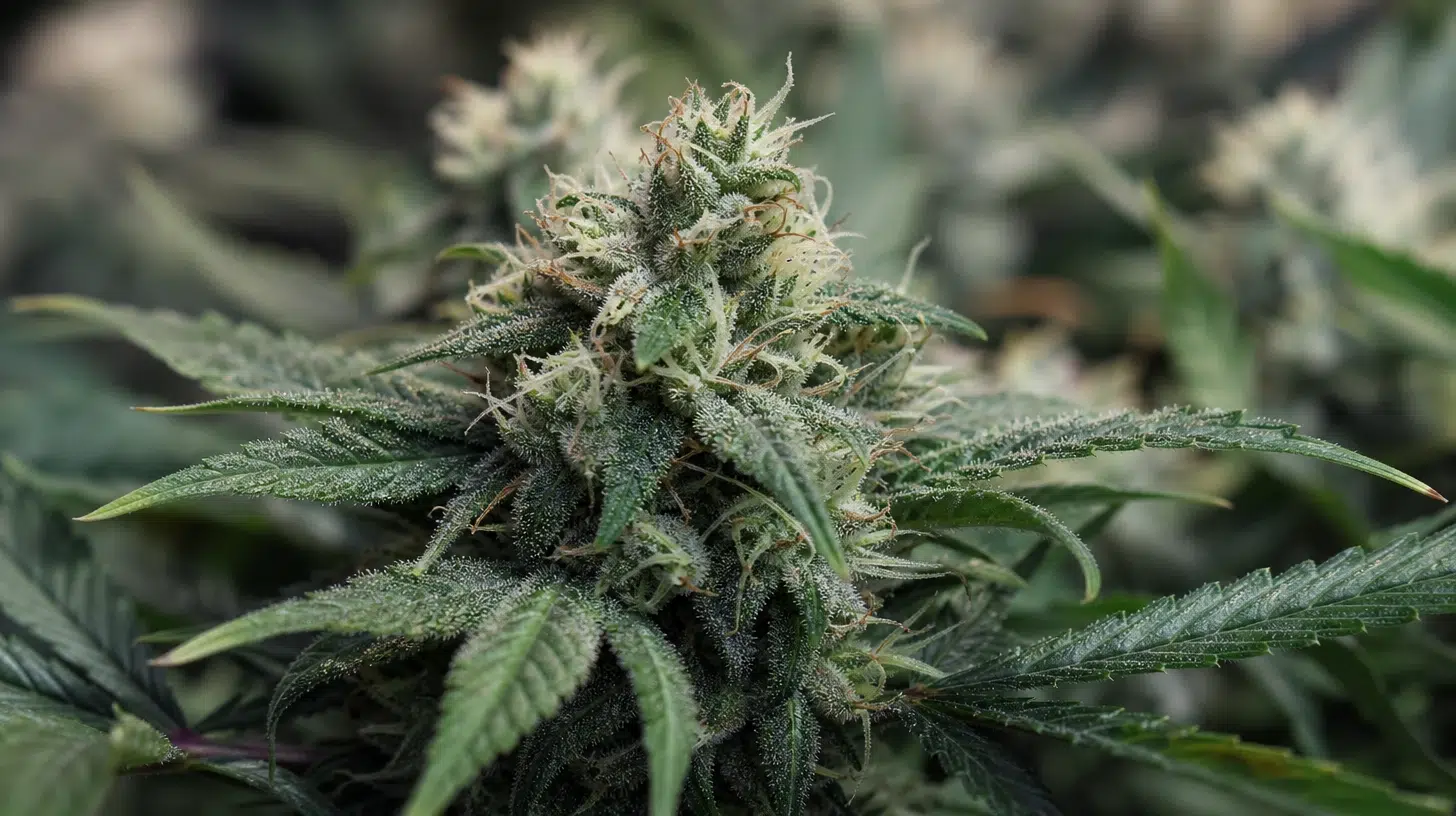

In the ever-evolving world of cannabis and home cultivation, the term "autoflowering" is constantly resurfacing. But to understand this botanical peculiarity that appeals to both experienced growers and novice gardeners, we must delve into the heart of genetics and grasp how certain CBD plants initiate their flowering cycle, independently of the traditional day-night rhythm. This mechanism, the result of a long evolutionary process and targeted crossbreeding with the renowned Cannabis ruderalis, is now receiving increasing attention. Let's analyze the genetic mechanisms at play and what differentiates autoflowering from classic flowering regulated by photoperiod.
The origin of autoflowering in cannabis
The autoflowering phenomenon is no accident. It results from a combination of environmental factors and—above all—a genetic inheritance from Cannabis ruderalis . This little-known subspecies, originating in the temperate zones of Central Asia, possesses a unique ability to flower regardless of the surrounding light cycle . Unlike more famous varieties such as Cannabis sativa or indica, ruderalis has developed a unique reproductive strategy, adapted to short summers and fluctuating light intensity.
By selecting and crossing these robust plants with cultivars rich in cannabidiol (CBD), contemporary breeders have obtained the famous autoflowering seeds. Thanks to this genetic contribution, the new lines combine early flowering, tolerance to climatic variations, and a high concentration of legal cannabinoids.
Photoperiod or maturity: two strategies to trigger flowering
To understand the specific characteristics of autoflowering plants , it is necessary to distinguish between two main families of cannabis : those whose flowering depends on the photoperiod (the daily duration of light) and those whose flowering depends on their biological age (maturity).
Most traditional cannabis varieties, whether sativa, indica, or many hybrids, begin their flowering cycle when they perceive a change in the ratio between light and dark periods. In our latitudes, this generally corresponds to the transition towards the end of summer, when the days naturally shorten.
This phenomenon is explained by a series of light-sensitive receptors located in the leaf tissues. These receptors send a hormonal signal indicating that the plant is entering a phase conducive to reproduction. As long as the photoperiod remains above a certain threshold (often around 16 hours of light), the plant maintains its vegetative growth, thus postponing flowering.
Conversely, plants with autoflowering genetics, inherited from ruderalis, are almost entirely free from the perceptual constraint linked to the light cycle. In these plants, flowering begins automatically after a few weeks of growth, often between fifteen and thirty-five days after germination.
This change is dictated by genetic triggers associated with the plant's physiological age: as soon as the plant reaches maturity, it begins its flowering cycle. This strategy allows the plant to successfully complete its reproductive development even in the event of unpredictable summer conditions.
The genetic triggers behind autoflowering
From a purely scientific point of view, the key toautoflowering lies in the adaptation of the hormonal circuit and the structure of the genome. Various genes act as switches activated not by the evolution of daylight but by continuous signals linked to the internal timing of the plant.
Recent studies have identified several candidate loci, particularly those near regions associated with the photoperiodic pathway. Among these, some are involved in the production of phytohormones such as gibberellin, a key element for the transition to flowering. The variation in the expression of these genes in ruderalis explains why flowering occurs rapidly and without waiting for an external light signal.
This genetic does not negate all the effects of light, but it significantly reduces the plant's sensitivity to the light cycle . The primary control then comes from a kind of molecular clock programmed to initiate reproduction at a specific stage of development.
In conventional varieties, sensitivity to light fluctuations dictates a seasonal flowering pattern: it's impossible to force the plant to flower if the amount of light exceeds a certain threshold. Autoflowering , therefore, possess remarkable autonomy: they offer fast and consistent harvests, regardless of the climate or sowing time.
The downside of this independence is that flowering cannot be delayed or accelerated via light management, unlike what some indoor growing techniques used to optimize photoperiodic.
Practical advantages and limitations of autoflowering seeds
Autoflowering seeds are particularly popular with urban growers or those who prefer fast growing cycles. Their main advantage: allowing for multiple harvests per year, regardless of the season, thanks to their specific genetics inherited from ruderalis .
- Speed : from planting to harvesting, the complete life cycle can last less than three months.
- Discretion : moderate size, bushy foliage, generally more contained odor.
- Flexibility : not very sensitive to errors in light management, making them ideal for outdoor use in temperate climates or for indoor micro-cultivation.
- Resilience : high hardiness inherited from ruderalis which limits misfortunes related to climatic stresses.
However, these varieties also have limitations, whether desired or imposed, depending on the grower's profile and the end use:
- production compared to a photoperiodic plant of the same growth period.
- Lack of control over the start or prolongation of flowering: rigid window to correct any problems at the beginning of the cycle.
- Terpene profile sometimes limiting: although the gap is narrowing every year thanks to selection, some enthusiasts demand the maximum aromatic bouquet characteristic of traditional lines.
Comparison between autoflowering and photoperiodic varieties
To gain a clearer understanding, a summary table allows us to compare their strengths:
| Features | Autoflowering | Photoperiodic |
|---|---|---|
| Flowering mechanism | Dependence on maturity (age) | Light dependence (photoperiod) |
| Cultivator control | Weak | High (precise control possible) |
| Average growth cycle | 8 to 12 weeks | Variable (3 to 6 months depending on management) |
| Potential yield | AVERAGE | Raised by optimizing the cycle |
| Climate adaptability | Very strong | Medium to high |
| CBD Profile | Balanced, stable | More variable, more personalized |
This overview highlights the versatility of autoflowering seeds and the strong interest of many growers in this innovative segment.
Practical applications of autoflowering among CBD users
Users focused on wellness or seeking therapeutic applications immediately perceive the benefits ofautoflowering strains. A short cycle means faster access to CBD-rich raw material, usable for making oils,herbal teas , or cosmetics.
Many small producers choose these varieties to obtain staggered harvests throughout the year. In addition, they offer the possibility of diversifying phenotypes and terpene profiles through multiple automated sowing methods, tailored to their specific needs.
What are the main advantages of autoflowering seeds for growing CBD?
- Ultra-fast growth: automatic flowering after 3-5 weeks of growth.
- Independence from the day-night cycle, ideal for challenging climates.
- Ease of maintenance due to the hardiness resulting from ruderalis genetics.
| Criteria | Autoflowering |
|---|---|
| Total growing time | ~75 days |
| Risk of light error | Very low |
Why is Cannabis ruderalis essential in the creation of autoflowering varieties?
Cannabis ruderalis possesses a unique ability: it begins flowering as soon as it reaches maturity, regardless of the amount of light it receives. Breeders utilize this property by crossing it with CBD-rich strains to create autoflowering varieties adapted to all kinds of environments. This genetic line offers robustness, speed, and ease of cultivation, without sacrificing the desired phytotherapeutic qualities.
- Flowering is unaffected by the season.
- Short cycle, suitable for Nordic and Mediterranean countries.
Is it possible to optimize the yield of an autoflowering plant despite the automatic flowering?
Yes, some techniques can improve yield even if the plant starts flowering on its own. These tips include early repotting, balanced fertilization, and controlled watering throughout the growth phase. However, the scope for action is more limited than with photoperiod-sensitive plants, since the genetic trigger remains unchanged.
- Maximize root volume from the start.
- Promote constant intense light (18 hours/day) during growth.
- Use fertilizers specific to each stage.
Is the quality of CBD the same between autoflowering and photoperiodic varieties?
Thanks to recent advances in genetic selection, CBD levels can be as high in autoflowering plants as in photoperiod varieties. While very old ruderalis lines once had a lower cannabinoid profile, this is no longer the case with the proliferation of modern crossbreeding. However, the aromatic profile and gross yield can still vary from one method to another, depending on the cultivation strategy adopted.

Co-founder of CBD.fr
Julien Cordobes is the editor of CBD.fr. Born in 1978 in the Paris region, he first trained in e-commerce before turning to natural health approaches, a dual perspective that now structures his way of writing about cannabidiol: reading the scientific literature as it is, without hardening the conclusions, and presenting it in a language that everyone understands.
He discovered CBD at a time when the French market was developing faster than the information available to it. He acquired CBD.fr in 2022 and then took on editorial responsibility for the blog. Since then, he has published numerous articles covering the daily use of CBD, the interpretation of laboratory analyses, the evolution of the legal framework, and precautions for use.


