
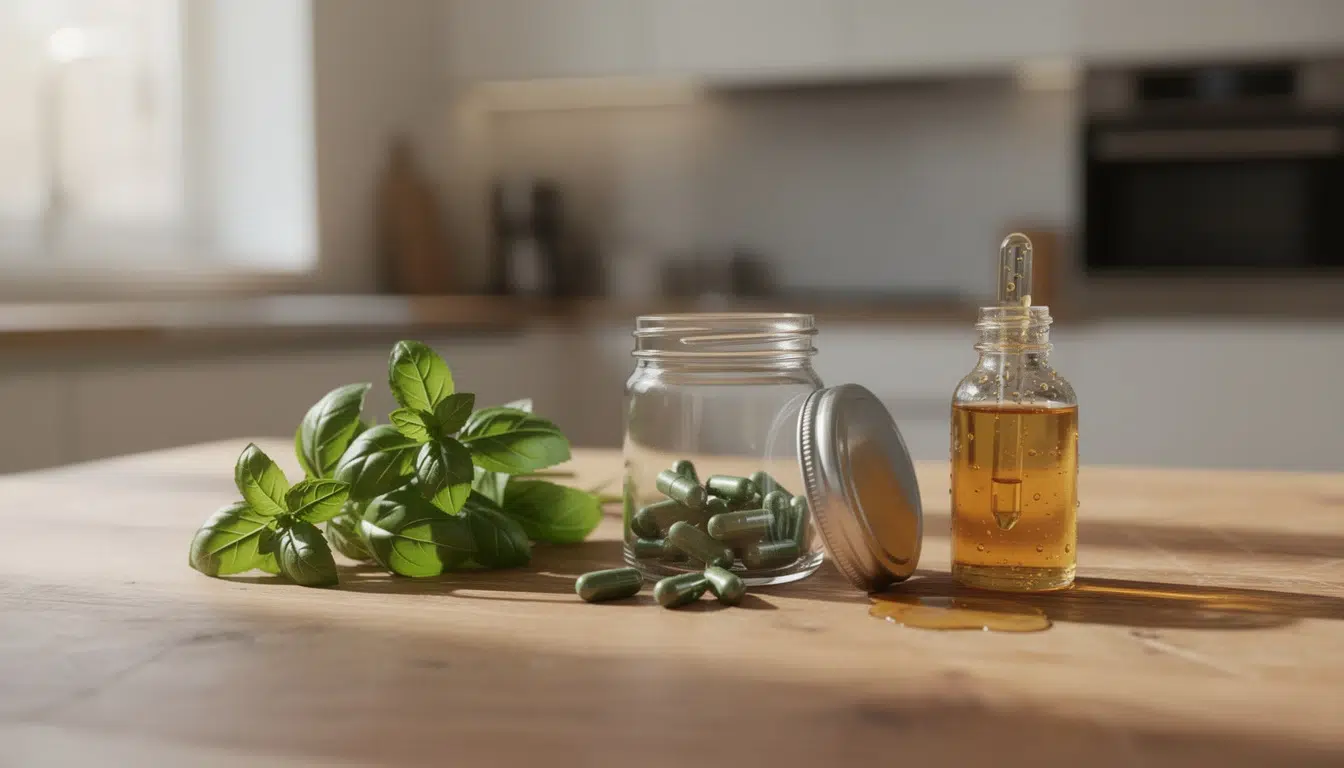

CBD has made a remarkable entry into the wellness world , but its place among dietary supplements continues to evolve. Demand is expected to explode in 2026, driven by increased consumer awareness and clearer legislation in the CBD market . However, between desired effects , precise dosage , safety of use , and evolving regulations , there is still much to understand before fully integrating CBD into one's health routine.
The rise of CBD in food supplements
The year 2026 marks a turning point for CBD, which is now establishing itself as a key ingredient in dietary supplements. Users are primarily seeking relaxation, stress management, support sleep , or improved joint comfort through the regular consumption of hemp-derived products. To purchase high-quality, legal CBD, it is recommended to consult specialized shops such as this online store.
Manufacturers are competing to innovate and offer formulas combining CBD with other natural extracts: vitamins, melatonin, or adaptogenic plants are blended with cannabidiol to enhance the user experience. This widespread trend responds to the expectations of a public seeking natural, effective, and safe solutions without the psychotropic effects associated with THC. If you would like to learn more about the cannabidiol molecule derived from hemp, check out this comprehensive guide.
CBD regulation in 2026: where do we stand?
In Europe, the legality of CBD in food supplements has long been a subject of debate. Since 2024, new directives have harmonized the status of CBD extracted from hemp, authorizing its incorporation into supplements provided that the THC content complies with regulatory thresholds.
Health authorities demand impeccable traceability. For each food supplement containing CBD, laboratories must guarantee the absence of detectable THC and prove that the total cannabinoid level complies with the strict standards imposed for consumer safety.
- Maximum THC level of less than 0.2% in the final product
- Mandatory certificate of analysis specifying the exact composition
- Prohibition of therapeutic claims not scientifically validated
The evolution of controls
Strengthening control procedures significantly improves the safety of CBD-containing food supplements. Independent laboratories regularly analyze marketed batches, and penalties for fraudulent practices.
This development reassures consumers, but also poses logistical and financial challenges for small players in the CBD market, who are often forced to reduce their catalogue to remain compliant.
International situation
In several countries outside the European Union, regulations differ. Some markets tolerate low doses of CBD even if THC sometimes exceeds European limits, while others apply a zero-tolerance policy towards all cannabinoids.
Traveling with CBD-based dietary supplements therefore requires caution and planning. Always check the legislation in force in your destination country to avoid many unpleasant surprises.
What are the expected and actual effects of CBD in food supplements?
When someone incorporates CBD into their routine, they generally aim for specific effects ranging from mental calming to improved sleep quality. Do these expectations hold true in the scientific reality of 2026?
Several recent studies confirm that CBD has a good safety profile and could play a positive role in stress management or athletic recovery. However, its exact molecular mechanisms remain the subject of further research, especially regarding prolonged use in healthy individuals.
Recognized benefits for well-being
The most widely accepted effects remain easier sleep onset, reduced muscle discomfort after exercise, and relaxation during periods of mental stress. CBD acts on the endocannabinoid system, modulating certain physiological responses without producing a euphoric effect.
However, there is significant inter-individual variability in the intensity and duration of the effects.adjusting the dosage is recommended to optimize the experience without causing discomfort.
Potential side effects
Even though CBD is considered safe, it can cause some temporary inconveniences depending on the amount ingested: dry mouth, increased fatigue or transient changes in appetite are among the reported reactions.
As a precaution, a medical consultation is advisable before combining with certain treatments (especially antiepileptics or anticoagulants) in order to rule out any risk ofdrug interaction.
How to choose the right dosage and ensure safe use?
Determining the appropriate CBD dosage requires listening to your body and starting gradually. Effectiveness varies depending on individual constitution, metabolism, and intended use. Many products therefore recommend starting with a low dose and then gradually increasing it until you reach your optimal comfort level .
To ensure safe use , always follow the instructions on the packaging and choose products with a third-party certificate of analysis . This vigilance protects against accidental , uncontrolled THC levels and limits the risk of exposure to pollutants
- Start with 5 to 10 mg of CBD per day for adults
- Adjust weekly in 5 mg increments if needed
- Never exceed the daily dosage recommended by the manufacturer.
Overview of the CBD market in food supplements in 2026
In six years, the CBD market has experienced spectacular growth. The diversification of formulas (capsules, oils, gummies, powders) coexists with an increase in the quality of complementary ingredients to appeal to a wide variety of audiences.
Transparency is becoming a decisive competitive lever: consumers readily favour brands offering perfect readability on traceability , the origin of the hemp, the extraction methods and the exact proportion of thc and cbd present in each batch.
| Product type | Market share (%) | Main use |
|---|---|---|
| Sublingual oil | 38 | Daily relaxation |
| Capsules | 31 | Stress management |
| Gummies | 19 | Playful sleep support |
| Powders/enrichments | 12 | Custom addition to recipes |
Frequently asked questions about CBD in food supplements in 2026
Does the CBD present in food supplements systematically contain THC?
No, the majority of CBD-based food supplements use so-called " broad spectrum " extracts or isolates , guaranteeing the measurable absence of THC . Only certain full-spectrum products may contain minute traces, always below the legal limit, which eliminates any psychotropic effects linked to THC.
- Broad spectrum : full spectrum without THC
- Isolate : 99% pure form of CBD
- Full spectrum : cannabinoids available, THC < 0.2%
How to verify the safety of a food supplement containing CBD?
Make sure the product has a certificate of analysis issued by an independent laboratory. This certificate guarantees the absence of contaminants, the accuracy of the CBD dosage, and a THC level that complies with legal limits. A transparent product will clearly display these documents on its packaging or instructions.
- Look on the packaging for the certifying body
- Compare the batch number with the lab report
- Consult the composition table before purchasing
Which profiles benefit most from the effects of CBD as a food supplement?
Many active people, athletes, seniors, and workers exposed to stress praise CBD for its calming effect on the nervous system. While each individual reacts differently, those who occasionally suffer from sleep disturbances, minor pain, or mild anxiety seem to derive significant benefit from appropriate supplementation.
- Working population under high pressure
- Athletes looking to speed up their recovery
- Seniors affected by joint discomfort
What precautions should be taken when starting a CBD-based food supplement?
Starting with a low dose and carefully observing individual reactions remains a golden rule. Monitoring for the possible appearance of mild side effects , such as unusual drowsiness, helps adjust the dosage. Always read the package insert and consult a healthcare professional if you are taking other medications to ensure a safe transition.
- Respect the daily dose
- Monitor body signals
- Avoid self-medication if you have a medical condition

Co-founder of CBD.fr
Julien Cordobes is the editor of CBD.fr. Born in 1978 in the Paris region, he first trained in e-commerce before turning to natural health approaches, a dual perspective that now structures his way of writing about cannabidiol: reading the scientific literature as it is, without hardening the conclusions, and presenting it in a language that everyone understands.
He discovered CBD at a time when the French market was developing faster than the information available to it. He acquired CBD.fr in 2022 and then took on editorial responsibility for the blog. Since then, he has published numerous articles covering the daily use of CBD, the interpretation of laboratory analyses, the evolution of the legal framework, and precautions for use.


