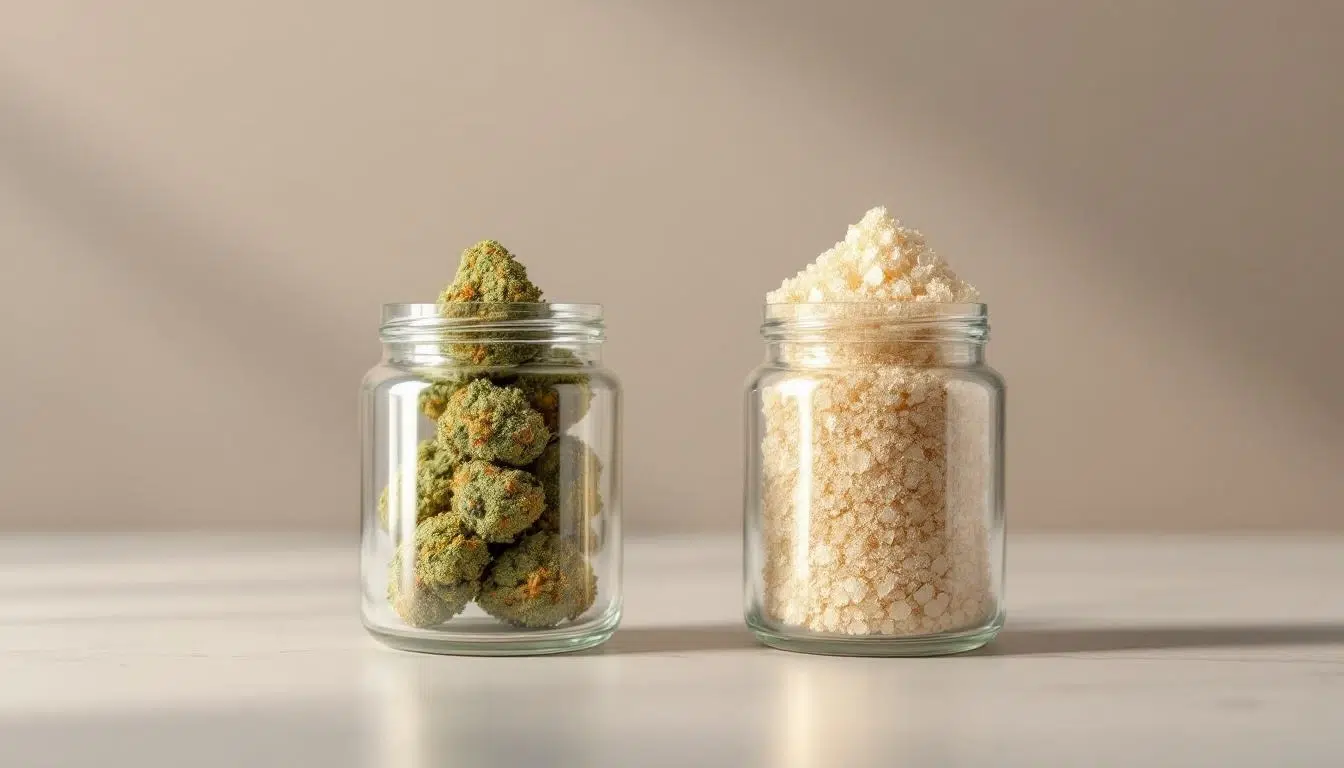

The debate surrounding CBD extracts, specifically between full-spectrum andCBD isolate, is a hot topic among both the scientific community and informed consumers. Recent studies and meta-analyses are shedding more light on the therapeutic properties of these two types of extracts. On one hand, some emphasize thetherapeutic efficacy of full-spectrum CBD, often attributed to theentourage effect. On the other hand,CBD isolate is appealing for its purity and standardization. What does current scientific data actually reveal about their differences in composition, their effects on inflammation and pain, and their overall impact on health?
Understanding the compositional differences between full spectrum and CBD isolate
The concept of full spectrum refers to an extract that retains all the compounds naturally present in cannabis, including THC (within legal limits), various secondary cannabinoids, terpenes, and flavonoids. Conversely,CBD isolate is a purified form containing only cannabidiol, without any other associated molecules. This fundamental distinction in the composition of extracts directly influences their therapeutic potential.
Chemical analysis shows that full - spectrum CBD oils or products offer a high molecular complexity. These multiple substances can interact with each other and enhance their effects through what is known as the entourage effect . Isolate , on the other hand, has a uniform composition , allowing for precise control of CBD dosage, but excluding any potential synergistic effects.
- Full spectrum : CBD + other cannabinoids (CBG, CBC, CBN) + traces of THC + terpenes + flavonoids
- CBD Isolate : Pure CBD (>99%) only, free of other natural cannabis active compounds
Users can therefore expect different effect profiles depending on the form chosen. There are also different types of CBD oils available on the market, each with specific properties suited to certain uses; it is essential to learn about the different categories of CBD oils to make an informed choice. This raises the question of the impact of these differences on thetherapeutic efficacy observed in various medical conditions.
The entourage effect: myth or reality according to meta-analyses?
The concept of the entourage effect refers to the potential synergy between the various cannabinoids and other plant constituents present in full-spectrum extracts . Emerging in the early 2000s, this idea is experiencing a resurgence of interest today with new meta-analyses . Recent data tend to confirm the scientific validity of this hypothesis, even if it remains a subject of debate.
Compilations ofstudies published between 2018 and 2023 indicate that, for certain conditions such as inflammation and chronic pain, full-spectrum extracts show slightly higher improvement scores than those obtained withCBD isolate. This difference is thought to be due to the combination of several cannabinoids and terpenes capable of amplifying the analgesic and anti-inflammatory effects of pure CBD. However, this superiority remains moderate and depends heavily on the exact composition of each product.
Quantitative comparison of meta-analysis results
Here is a comparative summary from several meta-analyses focusing on the use of different extracts according to common therapeutic indications:
| Indication | Full spectrum | CBD Isolate |
|---|---|---|
| Chronic pain | Average improvement (20-25%) | Improvement (10-15%) |
| Inflammation | Significant reduction in symptoms | Moderate reduction |
| Anxiety | Efficacy varies depending on the profile of cannabinoids used | Stable but less pronounced effectiveness |
These figures illustrate a trend: theentourage effect benefits especially certain disorders where the intervention of multiple biological targets promotes molecular synergy.
Methodological limitations and biases
Despite the increasing number of studies, no meta-analysis has yet definitively distinguished between full-spectrum and CBD isolate. Several factors complicate interpretation, such as theheterogeneity of the products tested, the diversity of the populations studied, and the lack of standardization in clinical protocols.
It also appears that some full-spectrum exhibit varying efficacy depending on the precise ratio of active ingredients. Simply combining CBD with other cannabinoids : their proportions and the presence of terpenes significantly influence the results. A poorly balanced formulation sometimes offers no additional benefit compared to CBDisolate.
Applications and situations where full spectrum or isolate makes a difference
Studies and meta-analyses indicate that some medical fields benefit more from full-spectrum CBD , while CBD isolate is preferred in specific contexts. Knowing when to favor one form over another helps patients and professionals optimize therapeutic benefits .
Regarding inflammation and pain, full-spectrum hemp is often cited for its superior efficacy, likely due to the natural synergy of molecules derived from hemp. For anxiety,the situation is less clear-cut: isolateoffers consistent action in sensitive individuals, whereas the fluctuating composition of full-spectrum can lead to unpredictable results.
- Full spectrum recommended for joint pain, endometriosis, rheumatoid arthritis
- isolate during strict doping controls or in cases of THC
- Special cases : some genetic profiles respond better to isolate or require an adjustment of the CBD/THC
In pediatrics and for frail elderly individuals,CBD isolate remains frequently recommended as it eliminates any risk of interference with other treatments or side effects related to THC. However, recent clinical trials are now examining the safety of full-spectrum CBD even in these sensitive populations.
What are the implications for future research on the therapeutic efficacy of cannabis extracts?
Faced with the increasing number of scientific studies, research continues to refine our understanding of the therapeutic properties of different formulas. Meta-analyses emphasize the need for better control of variables related to plant origin, extraction methods, and dosage standardization in order to draw reliable conclusions.
Other parameters are emerging as essential: the determining influence of terpenes, the actual bioavailability depending on the dosage form, and the individual pharmacogenetic profile of the consumer. The future seems to lie in personalized formulations, capable of adapting full-spectrum orCBD isolate to each person's exact needs.
- Optimize cannabinoid/terpene ratios according to each clinical indication
- Incorporating pharmacogenetic factors to predict response to extracts
- Develop user guides based on detailed analysis of patient profiles
This also implies better informing the public about the real differences between these product categories, beyond marketing rhetoric. Understanding the added value – or lack thereof – of theentourage effect compared to a pure isolate is an essential educational step.
Frequently asked questions about full spectrum and isolate CBD
What is the main difference between full spectrum and CBD isolate?
Full spectrum CBD is an extract containing, in addition to CBD, other cannabinoids (such as CBG and CBN), terpenes , and traces of THC, in accordance with regulations.CBD isolate, on the other hand, contains exclusively pure cannabidiol (>99%), free of all other hemp components.
- Full spectrum : combined action of several molecules
- Isolate : rigorous dosage control and total absence of THC
Has the entourage effect been clearly established by studies and meta-analyses?
Recent meta-analyses suggest that theentourage effect provides an additional benefit for certain indications, particularly inflammation and chronic pain. However, this benefit remains variable and depends on the exact compositional profile of the extract, as well as the individual needs of each patient.
- Sustained positive effect in pain management
- Lesser or no benefits on other disorders (e.g., anxiety or sleep)
For which profiles or situations is CBD isolate still recommended?
CBD isolate remains recommended in environments subject to strict regulations ( anti-doping controls , so-called "sensitive" professions), and for individuals at high risk of adverse effects from THC . It is also relevant when the primary need is the complete absence of psychotropic risks.
- Professional athletes
- Pediatrics and the elderly
- Combination with certain sensitive drug treatments
What are the criteria for choosing between full spectrum and isolate?
The choice depends on several criteria: the nature of the condition being treated, personal tolerance to THC, individual sensitivity to terpenes and cannabinoids, and the legal context. Consulting a professional helps determine which formula best meets the consumer's needs and profile.
- Targeted disorder (inflammation vs. anxiety)
- Risks ofdrug interactions
- Whether or not a synergistic action via the entourage effect

Editor-in-Chief specializing in CBD
Julien, born on July 17, 1978, in the Paris region, is a prominent writer and expert in the field of CBD products. Following his studies, Julien developed a passion for natural remedies, including CBD. In 2022, he joined the CBD.fr team as an expert and regular contributor. Thanks to his scientific expertise and clear writing style, Julien helps demystify the complexities of CBD, while highlighting its benefits and potential applications through his articles and conference presentations.