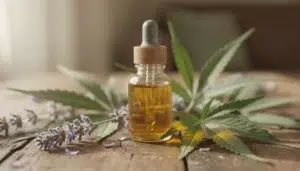

From May 15, 2026, infusions CBD and all CBD food products will be subject to an unprecedented ban in France. This decision, stemming from a change in European regulations, has sparked incomprehension and concern among both wellness-minded consumers and industry professionals. This article examines this upheaval, analyzes the official justifications, and explores how to adapt to the impending disappearance of CBD herbal teas.
Where did the ban on CBD in food come from?
Theban on CBD in food stems from several years of legal uncertainty and debate surrounding the status of cannabidiol within the European Union. French authorities are now strictly applying European legislation to align their position with that of their neighbors. The central issue is to guarantee food safety while clarifying the CBD market under the Novel Food Regulation.
The Directorate General for Food (DGAL) plays a key role in the national implementation of these new rules. It regularly sends technical notes to economic operators clarifying the official interpretation of the European regulatory framework, particularly regarding the application date set for May 15, 2026.
What does the Novel Food Regulation entail?
The novel food regulation refers to the European text governing all new foods that were not consumed in a significant way before May 15, 1997. CBD extracted from Cannabis sativa L., used as an ingredient for CBD food products, has been classified in this category since 2019 according to the opinion of the European Food Safety Authority (EFSA).
This classification means that no CBD food product can be marketed without European authorization . CBD infusions, CBD candies/gummies, oils CBD , and cannabidiol-enriched beverages are directly affected. To understand the upcoming regulatory changes, consult this article on European CBD regulations in 2025.Without robust scientific validation guaranteeing the absence of risk and psychotropic effects, no operator will be able to legally offer these products after the deadline.
The precise outlines of the announced ban
May 15, 2026, marks the end of a transitional period during which the production, import, and sale of CBD food products were tolerated under certain conditions. From now on, controls will be tightened and this tolerance will disappear, particularly targeting CBD infusions and edible formats such as gummies, chocolates, and cookies.
This change aims to avoid any confusion regarding the legal status of cannabidiol in food. The legislation primarily targets products containing added cannabidiol, regardless of its origin or extraction method. The DGAL (Directorate General for Food) will intensify its compliance checks, with recalls of non-compliant batches beginning in May 2026.
Scope of the measure
All forms of CBD food products are affected by this reform, including:
- CBD herbal teas obtained by infusing leaves or flowers rich in cannabidiol.
- Ready-to-drink herbal teas in individual sachets or loose blends,
- CBD candies/gummies, lozenges and other sweets,
- Cookies, cakes or snacks enriched with cannabidiol,
- Sodas, functional waters and plant-based drinks containing CBD.
Even CBD oils intended to be added to culinary preparations will be prohibited for oral use, unless a novel food authorization after a full European evaluation.
Exception: cosmetics and topical uses
The ban does not apply to CBD oils intended for topical use or products strictly classified as cosmetics. These remain authorized, provided they comply with European standards on ingredients and health claims.
Nevertheless, increased vigilance will be maintained regarding the promotion of certain oils standardized in cannabidiol, to avoid any circumvention aimed at passing them off as food supplements or natural remedies to be ingested.
Consequences for players in the French CBD market
Producers, distributors, and specialized retailers will need to adapt their strategies quickly. Until the implementation date, they will no longer be able to develop new ranges of CBD food products intended for human consumption, under penalty of administrative and financial sanctions. This regulatory pressure affects large retailers as well as specialty shops, delicatessens, and online platforms.
This adaptation also applies to agricultural sectors involved in hemp cultivation for food. Business models will need to pivot towards textiles, construction, biomaterials, or refocus efforts on topical applications for animal and human well-being.
Impact on consumption habits
With the gradual disappearance of CBD teas, consumers will have to rethink their wellness routines. Many will turn to other relaxing plants or favor synergies already proven in traditional herbal medicine.
Furthermore, some concerned users may turn to artisanal self-production or illicit online purchase from less scrupulous actors, exposing themselves to increased health and legal risks in the absence of product traceability.
Price fluctuations and stock shortages
In the coming months, the market is expected to see price increases, linked to a rise in precautionary purchases and the anticipation of potential shortages. Some retailers plan to clear their remaining stock before May 15, 2026, causing a temporarily high demand. Discover our discounted CBD oils.
This tension could lead to massive sales just before the deadline, but afterwards, supply will dry up considerably. Without European authorization via the novel food regulation, no legal revival of the CBD food market is expected in the short term.
Possible alternatives in the wellness market
The disappearance of CBD infusions opens the door to a redefinition of the wellness offerings in France. Manufacturers and herbalists are exploring various avenues to meet the persistent demand for natural solutions for pain relief, stress reduction, or promoting sleep.
Among the alternatives considered: the development of traditional plant complexes (passionflower, valerian, chamomile), the improvement of essential oils for external use or the rise of cosmetic formulations based on non-ingestible cannabidiol.
Opportunities for innovation
Some players are betting on the creation of new patented extracts that comply with future European regulations , or on the submission of solid scientific dossiers to obtain long-term novel food authorization
A wave of innovation could bring together the different European markets, which are tending towards a gradual normalization of the status of cannabidiol in certain well-defined segments — but still far from standardized food ingestion as we know it today.
Towards international harmonization?
While France is strengthening its regulations, other countries are continuing to consider safety criteria, maximum daily doses, and purity guarantees for CBD food products. Several international initiatives aim to clarify the European Commission's position on cannabidiol extracts, particularly in light of the latest toxicological data published by the EFSA.
Until then, maintaining a transparent dialogue between manufacturers, professional associations and consumers remains essential to avoid confusion, misunderstandings or circumventions that are detrimental to public health and trust in the natural wellness market.
Frequently asked questions about the 2026 ban on CBD infusions
Which products are affected by the ban on CBD in food from May 15, 2026?
The ban applies to all CBD intended for ingestion. This includes: CBD herbal teas, ready-to-drink infusions, CBD candies/gummies, chocolates, snacks, gummies, sodas, CBD oils for swallowing, and any preparation classified as food under European regulations.
- Infusions (loose leaf or tea bag)
- Confectionery (gummies, lozenges, chewy candies)
- Pastries and biscuits enriched with cannabidiol
- CBD energy drinks and shots
Why was May 15, 2026 chosen as the date for the application of this text?
The application date corresponds to the end of a so-called "transitional" period. This period aims to give operators time to sell off their existing stocks and adapt their business models before the novel food regulation. This deadline also allows for harmonization of the timeline between European Member States to avoid discrepancies in the treatment of CBD in food.
| Period | Status |
|---|---|
| Before May 2026 | Tolerance under certain conditions |
| After May 2026 | Total prohibition except with specific authorization |
Will it still be possible to buy CBD oils after 2026?
It will still be possible to purchase certain CBD oils if they are clearly intended for topical use (cosmetics, massage) and not for ingestion. Any oil intended for oral consumption will fall under the ban, unless European authorization is granted later. It is therefore essential to be vigilant when choosing a product and to read the labels carefully.
- Oils for topical use : permitted
- Edible oils : prohibited without novel food authorization
Is there any hope of reintroducing CBD infusions to the French market?
Any potential reintroduction will depend on a favorable opinion from the EFSA (European Food Safety Authority) followed by European authorization via the novel food. Manufacturers must submit a complete technical dossier demonstrating the safety of CBD for food use. Until an exemption is granted in Brussels, CBD infusions will remain prohibited for human consumption after May 2026.
- Submission of a novel food
- Scientific evaluation by EFSA
- European decision followed by French adaptation

Editor-in-Chief specializing in CBD
Julien, born on July 17, 1978, in the Paris region, is a prominent writer and expert in the field of CBD products. Following his studies, Julien developed a passion for natural remedies, including CBD. In 2022, he joined the CBD.fr team as an expert and regular contributor. Thanks to his scientific expertise and clear writing style, Julien helps demystify the complexities of CBD, while highlighting its benefits and potential applications through his articles and conference presentations.