
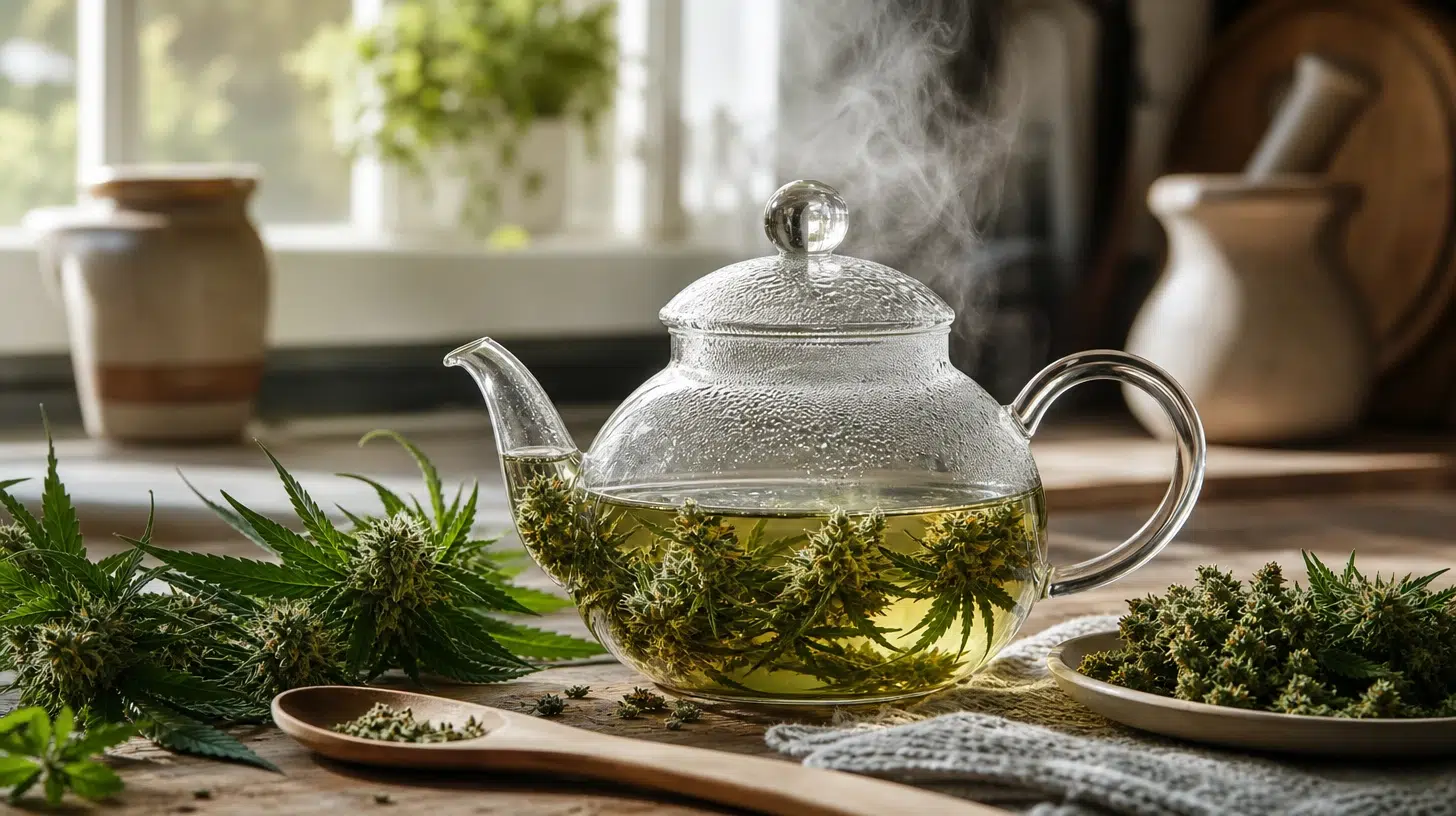

Preparing tea CBD often raises a crucial question: how much CBD flower should I use to maximize its relaxing effects while maintaining control over my experience? From dosage in grams and cannabidiol content to the preparation ritual, each step influences the final result in the cup. Whether you're a beginner or a regular user , fine-tuning the dosage is essential for an effective, flavorful drink tailored to your needs. This article provides a step-by-step guide to discovering the right amount of CBD flower to infuse , as well as tips for customizing your brew to suit your preferences and goals.
Understanding the parameters for determining the quantity of CBD flowers
The composition of a CBD herbal tea is not simply a matter of steeping a handful of flowers in hot water. Several factors come into play, from the choice of varieties to the preparation method, not to mention the precise calculation of the dosage in grams or milligrams of CBD per cup.
To achieve calming effects , it's helpful to understand a few simple principles regarding product concentration, cannabidiol solubility, and the impact of the associated herbs. These elements allow you to intelligently adjust the formula, whether you're seeking gentle relaxation after a workday or a true moment of rest before bed.
The main factors influencing the dosage in grams
The type of flower used primarily determines the potential CBD extracted during brewing. Not all varieties yield the same cannabidiol content, with the range generally varying between 3% and 8%. To discover a selection of quality flowers, browse our CBD flowers. The more concentrated the flowers, the less you need to reach your target dosage of milligrams of CBD per cup.
Experience also plays a role: a beginner will start with a lower dose, while a regular user might opt for a larger quantity of CBD flower to fully experience the relaxing effects. Individual tolerance, metabolism, and the desired outcome (sleep, anxiety, or simply a relaxing break) also influence the preparation.
Weight of the infusion and volume of the cup
The ratio of flower weight to water volume directly affects the strength of CBD tea. For a standard 200-250 ml cup, most recommendations suggest 0.5 to 1 gram of dried flower, depending on the desired potency. This base can be adjusted for larger pitchers or if you wish to prepare several cups at once.
It's worth remembering that extracting as much cannabidiol as possible sometimes requires slightly increasing the amount of material used, especially if the infusion is short or if decarboxylation (a key step) hasn't been optimized. For those interested in other forms of consumption, it can be helpful to learn about the duration of a CBD puff , as explained here: how long does a CBD puff last ? Gradually adjusting the dosage, while tasting, remains the best approach to achieving the ideal balance.
Preparation techniques: optimizing the extraction and flavor of the CBD infusion
The success of a CBD herbal tea depends as much on selecting the desired quantity as on the care taken in the preparation itself. Knowing how to effectively extract cannabidiol from flowers requires a certain precision, but also a bit of creativity to tantalize the taste buds.
Adding complementary herbs like chamomile, verbena , or linden not only enhances the relaxing effect but also enriches the aromatic profile. This clever combination improves the bioavailability of CBD and softens any flavors perceived as overly herbal.
The essential step of decarboxylation
Decarboxylating the flowers activates the CBD through gentle heat treatment. Without this step, a significant portion of the cannabidiol remains in its inactive form (CBDA), which is less easily absorbed by the body.
This method involves spreading the crumbled flowers on a baking sheet and then heating them for approximately 30 to 40 minutes at 110°C in a slightly ajar oven. This process increases the overall effectiveness of the infusion, as it optimizes the transfer of the active ingredient into the water.
Infusion method: water only or fat base?
CBD is fat-soluble, adding a small amount of fat (whole milk, oil , butter) promotes its absorption into the herbal tea. Steeping the prepared flowers in simmering water – never boiling – for seven to ten minutes remains the most common method.
You can use a tea ball, a special tea bag, or a paper filter to make serving easier and avoid swallowing plant matter. Depending on your preference, you can adjust the steeping time to make the drink stronger or lighter, keeping in mind that the relaxing effects are more related to the strength of the tea than to the steeping time beyond ten minutes.
Combining plants to harmonize the effects
Numerous synergies exist with chamomile, verbena , or linden. They enhance the calming effects, prolong relaxation, and work in conjunction with CBD to promote sleep or soothe muscle tension.
A suggested mug mix:
- 0.5 to 1 g of CBD flowers, depending on the desired concentration,
- 1 teaspoon of dried chamomile ,
- 1 sprig of verbena or a few linden leaves ,
- a few drops of coconut oil or whole milk.
Adjusting these proportions according to one's sensitivity allows for a unique taste profile while preserving the benefits of cannabidiol.
Practical tips for personalizing dosage and ensuring safe consumption
Finding the right amount of CBD flowers for your herbal tea also depends on the time of consumption, general health, and any history related to cannabinoids.
Adopting a patient and reasoned approach limits the risk of side effects, including excessive fatigue or potential drug interactions. Communicating with your doctor remains advisable when undergoing treatment, particularly in the case of chronic conditions.
Quick adjustment tips for different situations
Vary:
- the CBD concentration of the flower,
- the weight used per cup,
- additives (fat, honey, spices),
- the choice of complementary calming plants.
Alternating between small and large containers, varying the number of infusions possible with the same portion of flowers, and carefully observing your body's response will naturally lead you to the "ideal dose." Keeping a journal can sometimes help you remember which combinations and dosages provide the best soothing effects.
Some common mistakes to avoid
Overdosing from the start rarely leads to a richer experience, but rather to discomfort or unnecessary waste of product. Neglecting decarboxylation significantly reduces the therapeutic benefit of CBD tea.
Skipping the oil base or using boiling water deprives the drink of much of its potential. Modifying only one parameter at a time during the adjustment phase is always preferable to precisely identify what truly changes the perception of the relaxing effects.
What dose of CBD flowers should I use for a cup of herbal tea?
- Beginner: 0.2 to 0.5 g
- Regular consumer: 0.5 to 1 g
How to convert the weight of flowers into milligrams of CBD?
| Weight (g) | CBD content (%) | Estimated CBD (mg) |
|---|---|---|
| 0,5 | 5 | 25 |
| 1 | 5 | 50 |
| 1 | 8 | 80 |
Why combine CBD flower with other plants like chamomile or linden?
- Chamomile: digestion, sleep
- Linden: relaxation, stress management
- Verbena: general calming effect, floral aroma
What precautions should be taken with CBD herbal tea?
- Avoid excessive or uncontrolled use
- Consult your doctor if you have any doubts
- Do not drive after consumption if severe relaxation occurs

Co-founder of CBD.fr
Julien Cordobes is the editor of CBD.fr. Born in 1978 in the Paris region, he first trained in e-commerce before turning to natural health approaches, a dual perspective that now structures his way of writing about cannabidiol: reading the scientific literature as it is, without hardening the conclusions, and presenting it in a language that everyone understands.
He discovered CBD at a time when the French market was developing faster than the information available to it. He acquired CBD.fr in 2022 and then took on editorial responsibility for the blog. Since then, he has published numerous articles covering the daily use of CBD, the interpretation of laboratory analyses, the evolution of the legal framework, and precautions for use.


How to choose the right quantity of CBD flowers?
Correctly dosing your CBD tea is a delicate balance between effectiveness, safety, and enjoyment. Adjusting the dosage prevents any unpleasant sensations associated with excess, while ensuring calming effects .
Taking the time to precisely define one's expectations, then methodically experimenting with different quantities, allows one to develop a routine adapted to each individual, balancing well-being and flavor.
Recommended dosage for a beginner
Starting slowly remains the golden rule for any first experience with CBD flower. For a base of 200 to 250 ml, a portion of 0.2 to 0.5 grams of flower is generally sufficient, which is about a level teaspoon or two large pinches depending on the particle size.
This initial dose, measured in grams exposes the body to a moderate amount of cannabidiol, allowing it to gently explore its relaxing properties without the risk of excessive drowsiness or the dissociative effects sometimes experienced by highly sensitive individuals. Waiting twenty minutes after brewing to appreciate the effects makes it easier to adjust the dosage for the next cup.
Adjustments for regular consumers
With practice, the dose often increases to 1 gram per mug (approximately 300 ml), especially if the chosen strain has a CBD content below 5%. This gradual increase provides a calming effect without increasing the risk of addiction or digestive discomfort.
Some enthusiasts occasionally increase the amount of CBD flower to 1.5 or even 2 grams for a full teapot or evening recipes, particularly during periods of intense stress. In this case, ensuring the preparation is well-filtered and monitoring individual reactions helps guarantee responsible consumption.
Calculating CBD dosage in milligrams: concrete examples
The total weight of the flowers is always distinguished from their precise cannabidiol content . For example, for a flower standardized to 6% CBD, 1 gram will correspond to 60 mg of the active ingredient potentially available to the body.
This table summarizes the results for different dosages and concentrations:
This estimate helps to better target the dosage in milligrams of CBD per cup and to adapt the dosage according to the variety and strength sought.