
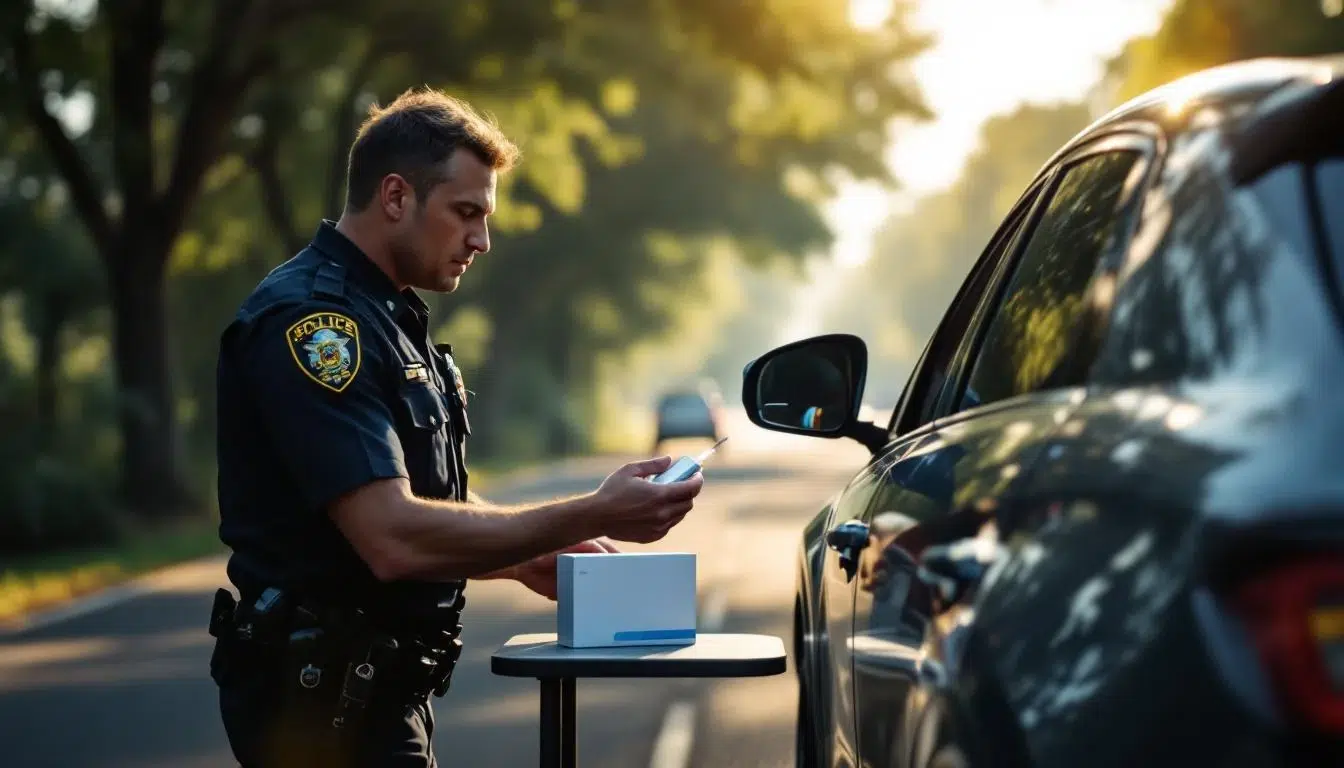

In France, the increasing number of roadside checks is raising many questions among CBD users, who are often worried about being subjected to a saliva test. Between strict regulations surrounding drug detection and the growing popularity of CBD consumption, the legal uncertainty remains a source of stress for drivers. In this context, it is essential to understand what French law says and to identify the specific risks associated with a roadside drug test. What French law says about CBD and driving: French law distinguishes between CBD and THC regarding road safety. CBD benefits from a certain degree of tolerance as long as it remains below the legal THC limit. However, the presence of THC in the body is strictly prohibited while driving, without any exceptions or minimum thresholds. Thus, any driver can be subjected to a roadside checkincluding a saliva testprimarily designed to detect THC , a psychoactive molecule classified as a narcotic.Current legislation does not set a minimum threshold: any trace of THC detected automatically results in a penalty. The basics of roadside drug testing in FranceDuring a
roadside check
, law enforcement officers select certain drivers to perform a saliva test. This test aims to identify several classes of substances, including THC. Refusing to submit to this roadside drug test is a severely punished offense. If the result of the saliva test is positive, a second, more comprehensive examination is generally carried out in a laboratory to confirm the presence of
THC or other narcotics. This double verification strengthens the reliability of the drug detection process. The ambiguity of CBD in relation to saliva tests CBD is not considered a
narcotic
under European and French legislation, provided that its THC levelremains below 0.3%. However, most CBD products contain residual traces of THC, which fuels the fear of detection during a roadside drug test. This situation puts CBD users in a state of uncertainty during a roadside check. Even if the consumed product does not produce any psychoactive effects, it may contain enough THC to trigger a positive saliva test, with all the associated legal consequences. Those who wish to learn more about the potential consequences can consult this page dedicated to the risks of losing your license after consuming CBD. How do roadside saliva tests work? The saliva test used during roadside checks looks for certain specific molecules in saliva, including THC. These roadside tests offer a quick result but can create complex situations for those who legally consume CBD. The detection time varies depending on the frequency of use and each individual’s metabolism. Four types of narcotics are tested for, including cannabis by its main active molecule: THC. Near-immediate detection after consuming cannabis containing THC. The window of salivary positivity ranges from a few hours to more than 24 hours, depending on the individual. The THC threshold used remains very low, often close to zero. No legal tolerance threshold is set for THC in France. In practice, consuming a CBD product containing less than 0.3% THC reduces the risk, but does not eliminate it entirely. Saliva tests do not distinguish between intentional THC intake and a simple residual presence from an authorized CBD product. It is also important to note that mixing CBD with other substances like alcohol increases the risks of driving; to learn more about the combined effects, you can read this article on thecombination of CBD and alcohol in relation to driving licenses. Factors such as the quality of the product, the quantity ingested, and the frequency of consumption therefore strongly influence the risk of
detection during a roadside check. Penalties incurred upon detection of THC French lawapplies a strict policy regarding the detection of drugswhile driving. Any motorist showing even the slightest trace of
THC
in a saliva test is subject to immediate and severe penalties. This repressive framework also applies to the consumption of CBD if it has resulted in the unintentional ingestion of THC , even in very small quantities. Here are the main penalties incurred in the event of a positive saliva test: Six points deducted from your driver’s license Immediate administrative suspension (up to three years)Fine of up to €4,500 for repeat offenses Imprisonment of up to two years Possible mandatory monitoring and awareness courses Faced with this strict system, each user must assess the true risks associated with CBD consumption before driving. Using CBD oil or flowers, even if legal, can be enough to trigger an undesirable detection during a traffic stop.
It should also be noted that car insurance companies may refuse to compensate a driver involved in an accident while under the influence of drugs, regardless of whether the THC consumption was intentional or not. Can the risks be reduced during a roadside check? Making sure to buy only CBD products accompanied by certificates proving their compliance (less than 0.3% THC) remains essential. Despite this, no CBD-based product is safe. Consuming CBD regularly does not guarantee zero risk during a saliva test in France. However, certain precautions can help limit the risk of a positive roadside test: Choose oils or herbal teas made from pure CBD isolate, with no trace of THC. Always check the composition through independent laboratory analysis. Limit CBD consumption just before driving, or even abstain before a long journey. Seek advice from professionals or specialized associations to adjust your CBD and driving practices. Some sensitive individuals may test positive despite complying with the law. Differences in the interpretation of analyses following a positive saliva test also exist, increasing legal uncertainty for individuals. Finally, administrative and legal appeals exist, but they require time, expense, and specialized expertise to effectively contest an unjustified penalty related to the detection of THC from the legal use of CBD.
Common questions about CBD, THC, and saliva tests during roadside checks:
Can consuming CBD lead to a positive saliva test during a roadside check? Yes, even if the CBD consumption involves a legal product, some contain traces of THC. A saliva test conducted during a roadside check can therefore be positive if the product used has a THC content—even a low one—sufficient to trigger the detection thresholds. Pure products (isolates without THC): low risk Full-spectrum products: increased risk, even below the legal limit How long does it take to detect THC after consuming CBD? The duration of detectiondepends on many parameters: type of product, quantity ingested, individual metabolism. In general, the THC It remains detectable in saliva for 6 to 24 hours, but these times vary. Product
Average Detection Time CBD Isolate Negligible to less than 6 hours Broad Spectrum 6 to 24 hours Full Spectrum (with residual THC)12 to 36 hours
- What evidence should I present if a test is positive even though I have only consumed CBD? In the event of a positive saliva test
- despite consuming only legal CBD, it is recommended to keep packaging, invoices, and official analyses of the products purchased. These documents can help prove your good faith to the authorities.
- Certificate of Analysis issued by a recognized laboratory
- Proof of purchase from a regulated seller Is there a legal THC limit for driving in France? No, French law
adopts a zero-tolerance policy regarding the presence of THC while driving. Regardless of the level found in a saliva test, the person is legally considered to be in violation. There is no official minimum threshold. Any confirmed trace of THC results in points being deducted, a fine, or even a license suspension.


