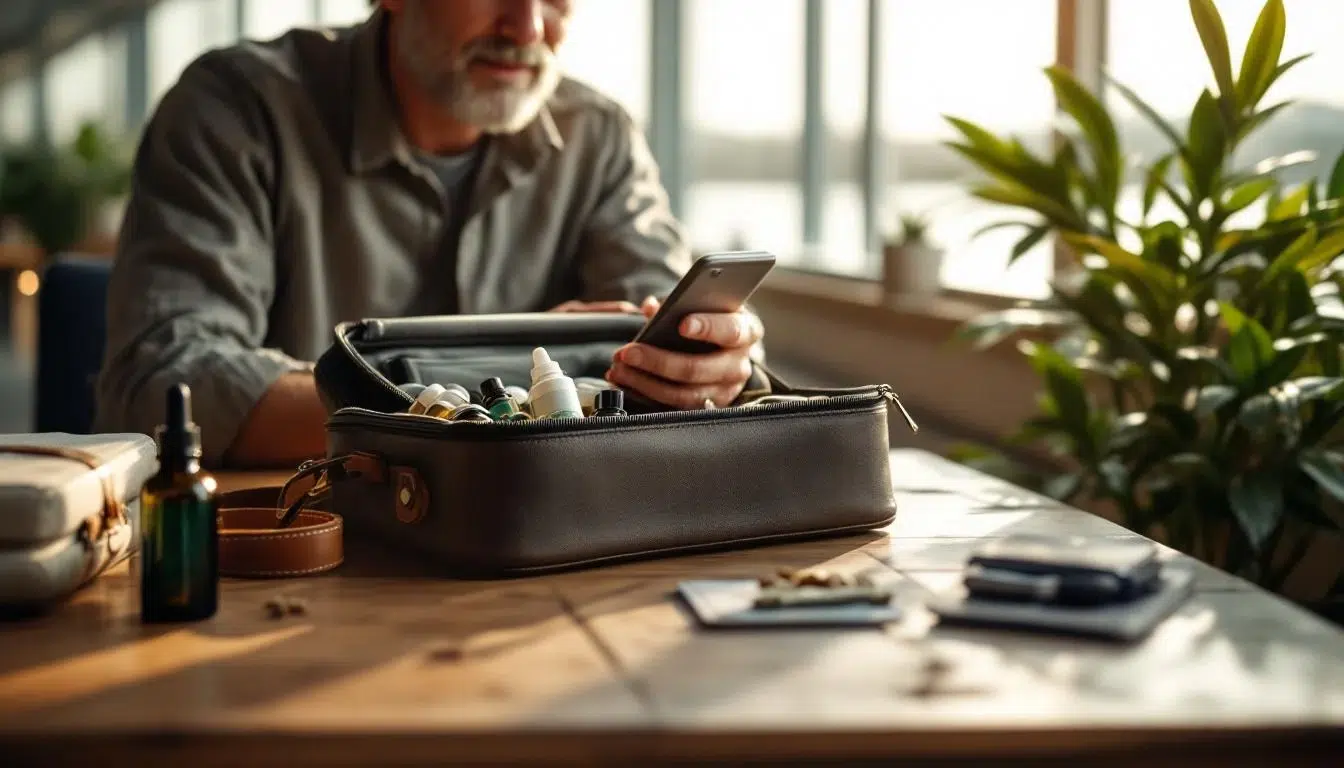

Cannabidiol (CBD) continues to be popular for its calming properties, but traveling abroad with CBD in 2025 remains a delicate matter. Differences in regulations between countries generate as much anxiety as uncertainty during airport or border checks. Some destinations welcome CBD without issue, while others impose drastic restrictions, or even prohibit any product containing THC, even in trace amounts. To travel with peace of mind, it is therefore essential to be well-informed about local laws, anticipate administrative requirements, and follow some common-sense rules regarding packaging and the quantity of products carried. Understanding International CBD Legislation: Globally, CBD legislation is evolving rapidly. From one continent to another, or even from one state to another within federations, laws vary regarding permitted THC levels, the form in which cannabidiol can be transported, and the required documentation to justify its transport. Before considering any trip, it is important to understand certain essential concepts. Distinguishing between a country where CBD is prohibited and one that is simply restrictive can prevent many inconveniences and forced returns at the airport. How do permitted THC levels vary from country to country? The main point of divergence between different jurisdictions often concerns the permitted THC level in CBD products. In Europe, this threshold is generally 0.2% or 0.3%, while in the United States, the federal limit is now 0.3%. Outside these areas, some countries prohibit any detectable level of THC, considering even the slightest residue a crime. To travel with CBD without risking penalties or fines, carefully checking the label of each product remains essential. Some laboratories provide precise analyses. The presentation of which facilitates customs clearance if needed. You will find detailed explanations here on the conditions for legally traveling with CBD: traveling with CBD Why is it necessary to distinguish between oil, flowers, and cosmetics? Not all cannabidiol products are subject to the same legal treatment. In several countries where CBD is permitted, only oils or cosmetics from certified sources can cross borders. Dried flowers, on the other hand, remain prohibited because their resemblance to “classic” cannabis complicates controls. The same applies to food supplements, which remain banned in entire regions, regardless of their origin. To avoid any confusion, choose oil packaged in its original packaging, accompanied by documents proving its legal origin and compliant THC level. This is the best precautionary advice before flying. If you wish to delve deeper into the legal aspects of traveling with this type of product with complete peace of mind, please refer to this specialized guide: conditions for taking CBD on a trip
Countries to favor or avoid with CBD in 2025 The list of destinations open or closed to CBD is still evolving very rapidly. It is strongly advised to stay informed of public updates before departure to avoid any legal risks Which are the main countries where CBD is permitted? In 2025, several territories confirm their relative openness to CBD
, as long as the THC level complies with local law. Among them:
France (under strict conditions) Switzerland (with a tolerance of up to 1% THC)Germany, Italy, Spain (limit of 0.2% THC)United States
(federal, 0.3% THC; note that this varies by state) Canada (regulation similar to full cannabis regulations, declaration required) United Kingdom (THC prohibition, total isolation requirement) Keep in mind that each country retains the right to adjust its regulations locally. A train journey from one European country to another can be enough to expose the traveler to an unexpected check, especially in certain sensitive airports. Which areas are high-risk or should be absolutely avoided when traveling with CBD? Some countries apply a zero-tolerance policy towards CBD, classifying it directly as a narcotic. These countries where CBD is prohibited include, for example: the United Arab Emirates, Japan, South Korea, Indonesia, Thailand (except for strictly regulated medical use), Singapore, Malaysia, Russia, and China (laws subject to highly variable interpretation). In these destinations, possessing or transporting even the smallest trace of THC leads to severe penalties, which may include imprisonment, immediate deportation, or even exorbitant fines. Besides these extreme cases, other states sometimes adopt an ambiguous position, tolerating CBD in exceptional circumstances, but expressly prohibiting any personal importation. CountryCBD Status Permitted THC LevelLegal Risks
France
Permitted ≤ 0.3% Confiscation/Fine United Arab EmiratesProhibited 0% Possible Imprisonment United States Varies by State ≤ 0.3%Confiscation/Citation
Switzerland Permitted≤ 1% Minimal Documents to Present and Practical Advice for Traveling with CBD Preparing your CBD suitcase requires meticulousness andplanning ahead.
A few simple steps can prevent a layover from turning into a real administrative nightmare.
What type of evidence should you keep and how should you present it? During an inspection, providing documents attesting to the lawful origin and the exact compositionof the products offers additional security. Among the
evidence to keep, we recommend:
Purchase invoice clearly stating the THC contentCertificate of Analysis (COA) from the laboratory specifying the dosage Original unopened packaging for each bottle/vial
- Official or annotated English translation of the regulatory description. Keep all these items in an easily accessible folder to expedite the process in case of inspection by customs or border police. A digital copy saved on your phone also protects against the loss of physical documents.
- What should you know about packaging, quantity, and air transport?
- Airlines do not always harmonize their guidelines on the air transport of CBD products.
- Respecting the liquid formats allowed in the cabin (generally a maximum of 100 ml per container), keeping the packaging intact, and spontaneously declaring the product when going through security increases the transparency of the inspection. It is best to avoid carrying multiple types of products: limit the quantity to what is considered credible personal use for the entire duration of your stay to avoid being charged with trafficking or having commercial intent. Note: In international travel, possession may fall under the regulations of the
- country of arrival rather than the country of departure; staying informed about
- local regulations protects against
unexpected legal risks .Frequently Asked Questions about CBD when traveling abroad Do I need to declare CBD at customs?Declaring your CBD productsto customs authorities helps avoid misunderstandings or suspicions. A proactive declaration accompanied by
documents to be presented
such as the purchase invoice and lab analysis demonstrates the traveler’s good faith. Officers may require you to open the original packaging to verify the absence of illegal THC. Have thecertificate of analysis on hand Present the
- original packaging
- Keep an English translation if possible
- Can I travel with CBD in my checked luggage? Placing CBD in checked baggage is still possible in most countries where CBD is permitted. However, it is important to comply with the regulations.
- Limit quantities
- set by the airline and national regulations. Ensure the product does not exceed the
- maximum legal THC level and keep the
written proof of compliance . Any discovery of CBD in checked baggage in a country where CBD is prohibited can lead to confiscation and severe penalties.Check the
| regulations of your destination country. | Keep the | supporting documents | in your carry-on baggage. |
|---|---|---|---|
| What packaging is recommended for traveling with CBD? | The | packaging | |
| must remain intact, airtight, and display all required information: | THC level | , origin of the hemp, CBD dosage. Products must be transported as sold, without transfer to anonymous containers. This allows for easy identification during security checks. Only pack the | quantity necessary for your stay |
| to minimize the risk of misinterpretation. | Opt for the | original sealed packaging | |
| Do not omit any | visible official information | Carry paper/digital copies of the | invoice |
and
COA Are there automatic penalties for a positive test? A positive THC test when the legal limit is exceeded automatically exposes you toconfiscation
and prosecution. The severity of the
penalties varies by country: in France or Germany, it may result in a simple fine. In some Asian or Gulf countries, detention leads to immediate arrest. Always check the penalties and legal risks of the country you are visiting. Country ConsequenceFrance
- Fine/confiscation United Arab Emirates
- Imprisonment/heavy fine Thailand
- Deportation/arrest United States
- Possibility of a citation