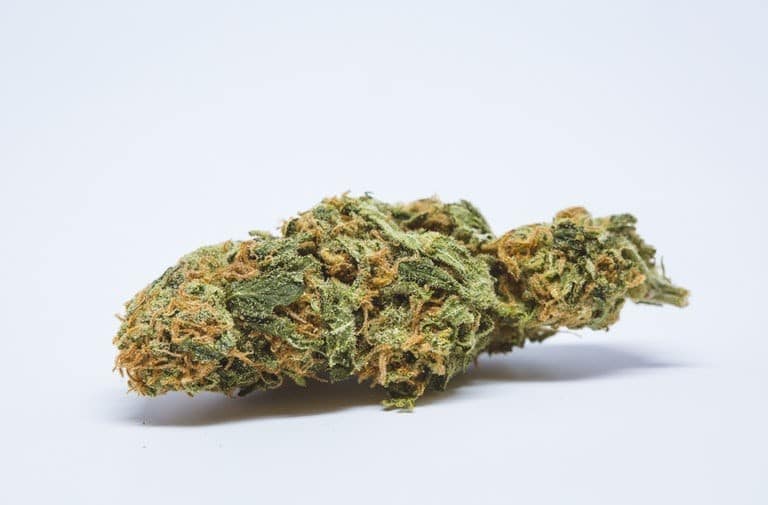
What is Indica?
In the marijuana community, strains are generally organized into three main categories:indica, sativa, and hybrid. For consumers who have ever purchased weed from a dispensary
(a reminder: this practice is illegal in France!)
, they have undoubtedly noticed that each strain on the menu has been assigned to one of these distinct groups. Indeed, cannabis plants in each category share not only physical and taxonomic properties, but their flowers (also called “buds”) each produce a different “type of high” (= effect). Although little research supports these distinctions—due to its federal illegality in some US states, relatively little research exists on cannabis in general—these categories are widely accepted in the marijuana community and date back to the 18th century. Cannabis indica, as a plant species, was first identified by the French naturalist and biologist Jean-Baptiste Lamarck in 1785. Lamarck published a description based on plant specimens he found in India. According to Lamarck, the plant is distinguished by its short, sturdy stature and bushy appearance. The indica leaf tends to be broad. Cannabis sativa, on the other hand, tends to be tall and wiry. Cannabis sativa and cannabis indica are the two main subspecies of the cannabis plant, while hybrid simply describes plants that have been crossed by the two. The cannabis indica plant
is also known for producing comparatively higher yields, denser buds, and more pungent aromas. Originating in the mountainous regions of Afghanistan, Pakistan, and India, it has adapted to harsh climates and early weather conditions by growing faster, flowering earlier, and producing thick layers of protective resin. Since exposure to cooler temperatures can turn the flower (or buds) of a cannabis plant purple, if you encounter purple weed, there’s a good chance it’s an Indica variety. What are the effects of Indica? 2-Everything-you-need-to-know-about-indica-cbd-frIndica varieties are known for producing a “body high,” leaving you physically relaxed and even sleepy. Marijuana enthusiasts often describe it as producing a “couch-locked” feeling and use the expression “in-da-couch” to remind themselves that indica effects are best enjoyed on the couch (preferably while watching movies!). Most people prefer indica effects in the evening.
In contrast, sativa strains produce an energetic “head high,” better suited to creative or physical activities, and are generally enjoyed during the day. Hybrid varieties are a cross between indica and sativa, producing a high that combines a bit of both properties.

Advantages of the Indica strain? The indica cannabis plant tends to be short, sturdy, and resilient. It is also easier to grow and flowers much earlier than its sativa counterpart. Its short stature makes it ideal for indoor cultivation. And one of its significant advantages is that it tends to have higher yields. Indica marijuana also offers a number of benefits for both medical and recreational users. Recreationally, indica is most popular for use before watching a movie, relaxing, and unwinding at night. It is also primarily known for making you feel happy, sedated, euphoric, hungry, and sleepy. The effect is often described as a “deep body stone,” which can relax muscles and act like a pain reliever. Medically, indica cannabis is popular for treating sleep problems, muscle spasms, chronic pain, anxiety, PTSD, and loss of appetite. The higher CBD content of many indica strains also makes it a preferred choice among many medical marijuana patients, such as those suffering from multiple sclerosis, fibromyalgia, and other conditions. Further research is needed to determine exactly how indica cannabis, in particular, can and should be used medicinally as a treatment option.
Indica Cannabis Strains? Indica Flower
Some of the most popular indica strains include Purple Kush, Grandaddy Purple, Northern Lights, Critical Kush, MK Ultra, Hindu Kush, Mango Kush, G13, God Gift, Skywalker, White Rhino, Afghan Kush, Master Kush, Blueberry, Blackberry Kush, Bubba Kush, and LA Confidential. Thanks to Rob Hoffman for this article, originally written in English, which the CBD.FR team has translated for your convenience. We have also included notes regarding French regulations. The CBD.FR team would like to draw your attention to the fact that this article’s source material originates primarily from Los Angeles, USA, and Toronto, Canada, where legislation differs from that of France. This guide will help you better understand the characteristics of indica, but it cannot be applied to France due to the illegality of marijuana in the country. References:

Article Source: https://herb.co/learn/indica/