
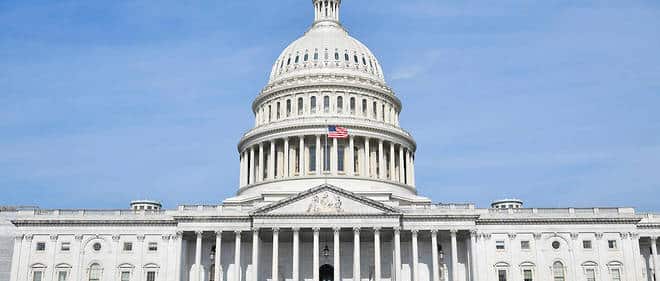

The report on marijuana was published by the US Senate. This report details the situation of this plant in the USA and then makes a series of proposals to the executive branch to improve the current situation and fully benefit from marijuana. With that said, in this article, we invite you to explore the main points of this report on marijuana in the USA. However, we wish to issue a warning at the outset. We alert our French readers to the content of this article, which focuses on the federal system of the United States of America – which should not be confused with French legislation or European Union law.
The summary
- Initial observation: a number of voters support the legalization of marijuana
- Controversy surrounding the DEA (Drug Enforcement Administration)
- The challenges related to the possible change in federal law
- The conclusions and recommendations of the report
Initial observation: a number of voters support the legalization of marijuana
Indeed, the first interpretation we can draw from the report on marijuana in the USA is this initial observation. In fact, its authors argue that a large portion of voters would support the legalization of marijuana in the USA. It is within this framework that the report specifies that:
"Despite its growing popularity – 91% of Americans believe cannabis should be legalized for medical or recreational purposes – cannabis remains illegal at the federal level.".
Then, further on, it is added that:
"Nevertheless, the cannabis industry in the United States is booming. Cultivation and sales have largely shifted from Mexican cartels to US-based companies operating in legal state markets (although a significant black market remains)."
Furthermore, beyond voter support, the report emphasizes that marijuana does present risks. Therefore, it urges the executive branch to investigate these issues. This could help limit potential harm, as the sector is booming, employs many people, and generates significant revenue.
"Experts estimate that the legal cannabis market employs over 200,000 people and will generate up to $24 billion in profits by 2025, with nearly $9 billion coming from medical cannabis sales."
It would actually be a shame to lose all these positive points because of the risks highlighted by legislators.
Controversy surrounding the DEA (Drug Enforcement Administration)
Indeed, following the previous point, the second area of analysis in this report on marijuana in the USA that we can address is the role of the DEA. In fact, there is considerable controversy surrounding the Drug Enforcement Administration. On the one hand, some criticize existing policies that inhibit cannabis research, directly targeting the DEA's role in studies. On this subject, the members who authored the report maintain that:
"It is imperative to increase the research base associated with cannabis, and that this research should be used to guide future policies so that appropriate regulations can be put in place to mitigate any negative effects or consequences on public health."
On the other hand, they add to the argument. In fact, the DEA's interpretation of the United Nations Single Convention and the federal Controlled Substances Act has resulted in only one entity being authorized to produce marijuana for research purposes. Therefore, this position has, they say:
"contributed to a lack of research, which hinders our public understanding of the health effects of products available for sale in state-regulated markets.".
The challenges related to the possible change in federal law
Let's turn to the third point. In fact, legalization can only be achieved by taking into account a number of challenges, particularly public health and safety. Indeed, legislators, while acknowledging voter support and the potential benefits of marijuana legalization, emphasize the risks. In this regard, their primary target is THC, the molecule responsible for the psychoactive effects of the cannabis plant.
From this perspective, it would be worthwhile to study the extent to which this molecule can impair an individual's driving ability. This is a crucial detail for public health and safety. Similarly, it would be necessary to examine how to keep marijuana out of the reach of minors and other vulnerable individuals, in order to protect them.
These challenges, among many others, are highlighted in the report on the legalization of marijuana in the USA.
The conclusions and recommendations of the report
To conclude this overview of the report on the legalization of marijuana in the USA, we invite you to discover, as a final section, the conclusions and recommendations of the legislators.
- Obstacles to Research – Research on cannabis is currently insufficient, particularly regarding adolescent use, impaired driving, and THC concentrations. Federal requirements for conducting marijuana studies are excessively restrictive and discourage research. To address this issue, Congress should pass the Cannabidiol and Marijuana Research Expansion Act.
- THC Concentrations – THC levels in marijuana products have gradually increased over time, raising questions about the implications for public health. The National Institutes of Health should “intensify its research on the short- and long-term impacts associated with high-potency cannabis and make a recommendation, jointly with the Food and Drug Administration (FDA), on whether states should cap the potency of cannabis products that can be sold.”
- Marijuana has an impact on pregnant women and adolescents – The caucus stated that more research is specifically needed regarding cannabis use by pregnant women and youth. It cited an opinion from a former surgeon general warning against marijuana use in these populations and said that health officials at all levels should amplify this message.
- CBD Products and Cannabis Therapies – There is significant interest in creating cannabis-derived medicines, and the legalization of hemp has led to a massive proliferation of CBD products on the market. However, most are not FDA-approved for therapeutic use. The agency should continue to exercise its enforcement powers with respect to cannabis and its derivatives and ensure that the public knows which products are approved for medical use and which are not.
- Impaired Driving – Driving under the influence of marijuana “threatens public safety.” While states have taken steps to address the problem, there remains no universal tool to determine if a person is actively impaired by THC. The caucus called for accelerated “research into detecting cannabis-impaired driving, including the development of standardized field tests,” increased funding for forensic and toxicology laboratories, and enhanced training for law enforcement officers to become drug recognition experts. It also wants states and localities to “establish a uniform reporting system to collect information on cannabis-related driving incidents nationwide.”.
Our source: Marijuana Moment.
References
- https://www.marijuanamoment.net/senate-marijuana-report-highlights-legalizations-popularity-and-risks-while-criticizing-dea-research-barriers/?mc_cid=dac717b339&mc_eid=35711c3bd8

Co-founder of CBD.fr
Julien Cordobes is the editor of CBD.fr. Born in 1978 in the Paris region, he first trained in e-commerce before turning to natural health approaches, a dual perspective that now structures his way of writing about cannabidiol: reading the scientific literature as it is, without hardening the conclusions, and presenting it in a language that everyone understands.
He discovered CBD at a time when the French market was developing faster than the information available to it. He acquired CBD.fr in 2022 and then took on editorial responsibility for the blog. Since then, he has published numerous articles covering the daily use of CBD, the interpretation of laboratory analyses, the evolution of the legal framework, and precautions for use.


