
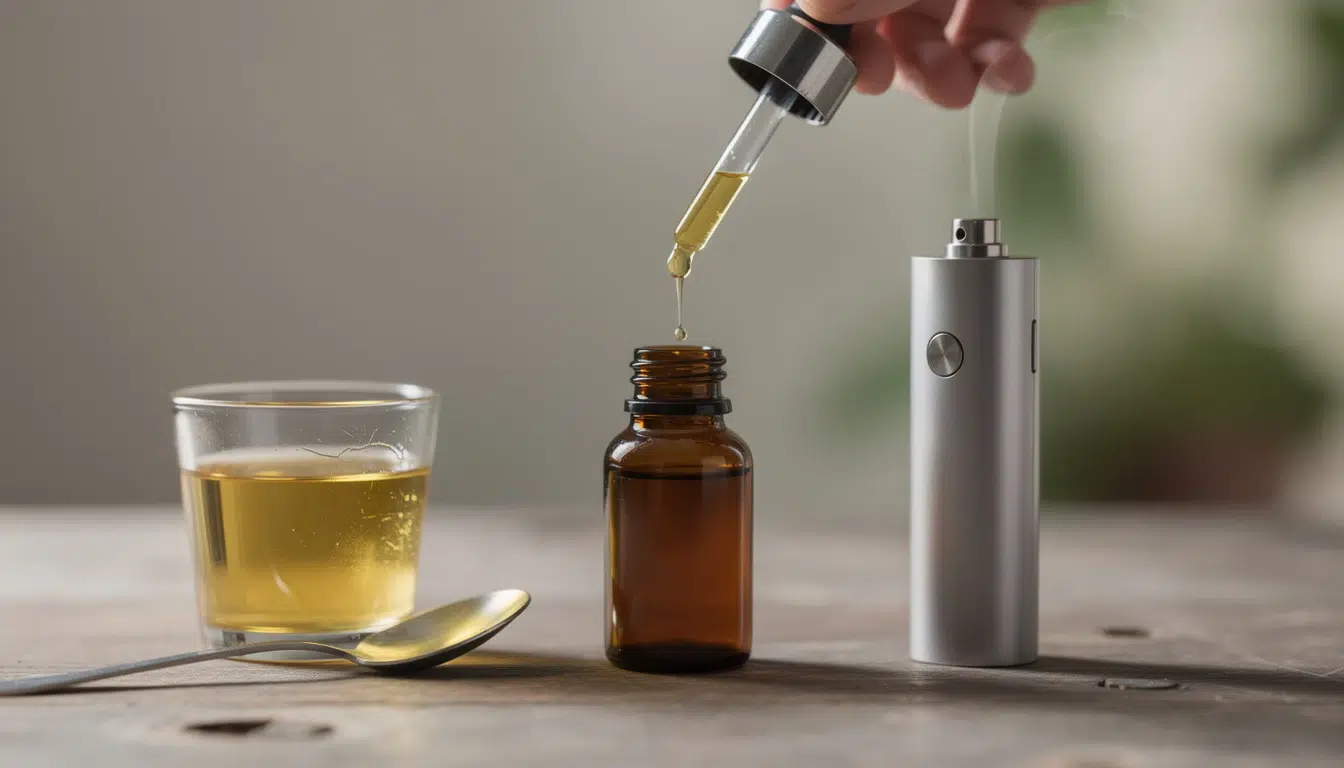

CBD bioavailability plays a crucial role in the effectiveness of cannabidiol-based products. This concept determines theactual amount of CBD absorbed and used by the body, depending on the chosen method of administration. Inhalation, oral ingestion, sublingual administration… each method influences thespeed of effects, their intensity, and the proportion of CBD reaching thebloodstream. This guide details the major differences to help you better understand how to optimize your experience and choose the solution best suited to your needs.
What is CBD bioavailability?
CBD bioavailability corresponds to the percentage of cannabidiol actually absorbed by the body after consumption. Not all methods of administration allow CBD to cross bodily barriers with the same efficiency. The higher the bioavailability, the more quickly and fully the user benefits from the desired properties of cannabidiol. When it enters the body, CBD encounters several physiological obstacles depending on the form chosen, such as the digestive tract or the oral mucosa. This is why two people consuming the same dose can experience very different effects, depending on the absorption route chosen. Understanding these mechanisms prevents wasting product and money, while allowing you to adjust your use to obtain consistent results. CBD bioavailability
Comparison of the main routes of administration The forms of CBD available on the market are varied: oils, flowers, capsules, gummies, or infusions. Each format has its own specific characteristics, determining the speed and intensity of the effects felt. To gain a clearer understanding, it is helpful to examine the three main categories of use: oral ingestion, sublingual ingestion, and inhalation. Oral ingestion: capsules, gummies, and infusions Oral ingestionThis method involves swallowing the product directly – in the form of a capsule ,gummy
, drink, or by mixing CBD oil with food. After ingestion, the CBD passes through the digestive system and then undergoes the “first-pass hepatic effect.” The liver metabolizes a large portion of the compound before it reaches the bloodstream, which mechanically reduces the
bioavailability of CBD. On average, bioavailability via oral ingestion is between 6% and 12%. This means that of a 25 mg dose, only 1.5 to 3 mg will actually reach the bloodstream.Absorption is therefore limited, but the effects, although less intense, often last longer (up to six hours). This method is suitable for people seeking a gentle, gradual, and long-lasting effect. Low bioavailabilitySublingual route: oils under the tongue
Sublingual administration involves placing a few drops of CBD oil under the tongue and waiting 60 to 90 seconds before swallowing. The sublingual glands then ensure rapid absorption of CBD, which enters the bloodstream almost directly, largely bypassing the digestive system and liver.
Thanks to this preferential route of absorption, the bioavailability of CBD reaches between 13% and 20%, nearly double that of oral ingestion. The first effects generally occur in less than 20 minutes and offer greater stability. This method appeals to those seeking a faster, more controlled, and more effective response in terms of the intensity of the effects. Inhalation: vaporization and consumption of flowers Inhaling CBD, via vaporization of specific oils or flowers, allows for near-immediate absorption by the alveoli of the lungs. CBD passes almost entirely into the bloodstream without prior filtering by the liver or intestines. This characteristic gives this method remarkable effectiveness. In practice, theBioavailability via inhalation varies from25% to 55%
. The effects are noticeable in less than a minute, reaching marked peaks of intensity but over a shorter duration, typically one to three hours. Suitable for occasional needs and those seeking a powerful and immediate effect, inhalation remains the champion of speed and intensity of effects. Comparative Table of CBD Administration Methods Method of AdministrationBiodiscabilityOnset of Effects Duration of Effects Associated CBD Forms Oral Ingestion6-12%
30 to 90 min
4 to 6 h capsules, gummies, infusion Sublingual Route13-20% 10 to 20 min 3 to 5 hoil, tincture Inhalation25-55%
1 to 5 min 1 to 3 h flowers, e-liquid, vaporizing oil Factors Influencing CBD AbsorptionBeyond themethod of administration,several personal factors influence the
absorption
andbioavailability of CBD.Body weight, individual metabolism, diet, and the state of the digestive system play a significant role. For example, taking CBD with fats can significantly increase the amount absorbed during oral ingestion. Similarly, the quality and composition of the selected products also affect absorption efficiency. A full-spectrum extract differs from a pure isolate. Carefully reading labels and experimenting with different approaches allows you to refine your routine based on observed reactions. Weight and age of the individual Taken on an empty stomach or with a meal Quality and concentration of the product Lipid-based blends for oral ingestion Frequently asked questions about CBD bioavailability Why does CBD bioavailability differ depending on the method of administration?
Each method imposes distinct physiological steps on CBD. Oral ingestion This involves passage through the digestive tract and hepatic filtration, significantly reducing the amount absorbed. Conversely, the sublingual route andinhalation largely bypass these barriers, hence their higher efficacy. The tissues involved, thespeed of effects
and their
| intensity | therefore vary considerably depending on the method used. | First-pass hepatic effect for oral ingestion | Direct absorption via sublingual mucosa | |
|---|---|---|---|---|
| Rapid penetration into the bloodstream via the lungs | Is inhaling CBD always preferable for everyone? | While | inhalation | |
| offers the best | bioavailability of CBD | , it may not be suitable for all situations or all sensitivities. Some users prioritize discretion, ease of use, or are concerned about the pulmonary impact of inhaling. Personal preferences are just as important as the desired outcome, as CBD forms such as capsules, gummies, or sublingual oils also offer tangible benefits. These include: rapid onset of effects, strong but short-lived intensity, and the potential for irritation in some individuals. How can you maximize the absorption of orally taken CBD? To increase the bioavailability of CBD after oral ingestion, combining it with a source of fat facilitates absorption. Taking CBD during or just after a meal rich in healthy fats improves the amount absorbed into the bloodstream. Opting for liposomal formulations, where CBD is encapsulated in lipid micro-droplets, also optimizes absorption. Take CBD with a snack of avocado, nuts, or vegetable oil. | Choose preparations enriched with natural fats. | Try different timings depending on your metabolism. |
| Are there differences in bioavailability between oils, flowers, and infusions? | Yes, the nature of the product influences how CBD circulates in the body. Vaporized flowers consistently offer the best bioavailability, followed by sublingual oils. Conversely, infusions require complete digestion and exhibit moderate absorption rates, similar to gummies or traditional capsules. | Product | Average Bioavailability |
Vaporized Flower
25-55% Sublingual Oil13-20%Infusion/Gummy/Capsule 6-12%


