
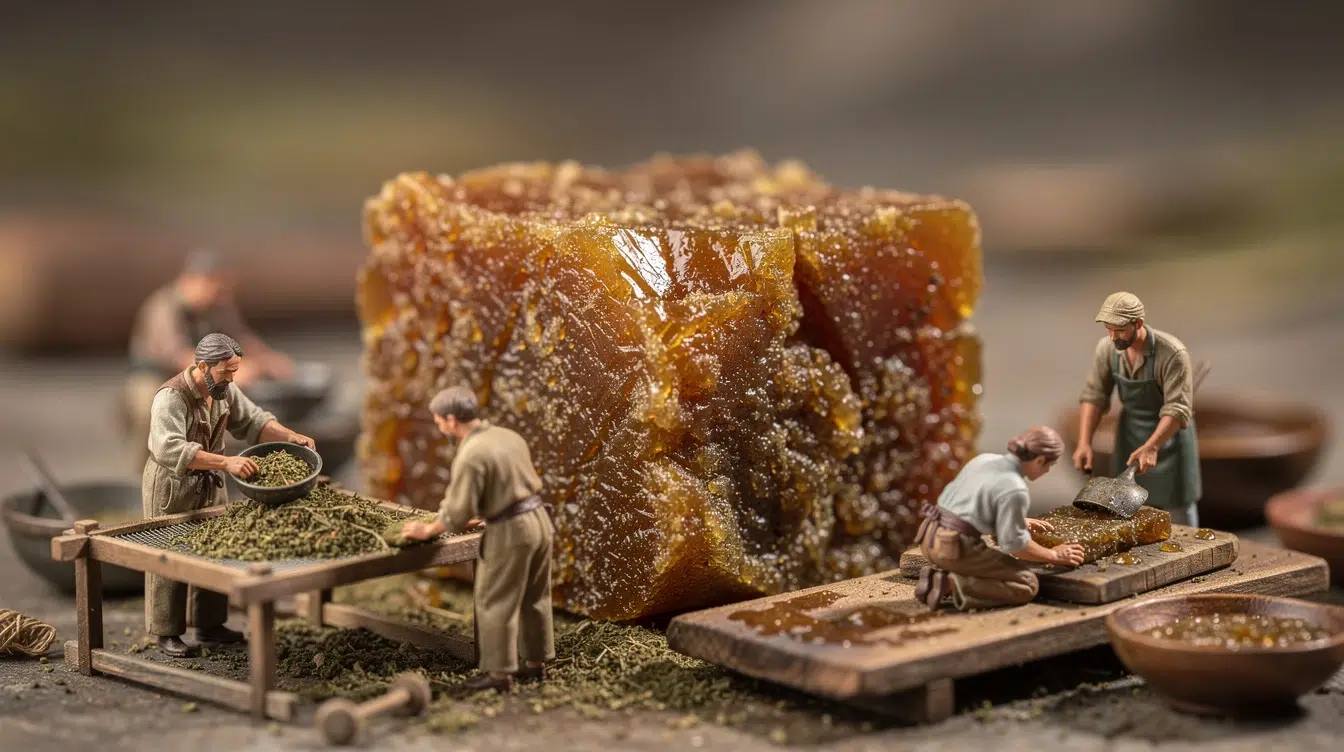

CBD resin has seen a resurgence in popularity in recent years, particularly thanks to iconic varieties like hash Triple 0 . Behind this mysterious name lies much more than just a cannabinoid-rich product: it represents an age-old tradition, revived by the passion of producers dedicated to quality and purity . From the origins of CBD pollen to the mastery of triple filtration , let's explore the fascinating history of this exceptional resin and its influence on current trends in legal CBD .
The origins and legacy of the triple 0 hash
The term "triple 0" has its roots in the traditional culture of hashish, particularly widespread in the Maghreb and Middle Eastern countries. This centuries-old expertise relies on the meticulous selection of trichomes from cannabis, whose powdery texture is reminiscent of the CBD pollen used today in Europe.
Triple 0 hash thus embodies a passing of the torch between the artisanal techniques of yesteryear and the modern methods favored in the hemp industry. Heir to this traditional production , it combines respect for original purity with adaptation to current legal and quality requirements.
Influence of historical producing regions
In Morocco, Afghanistan, and Lebanon, resin production has evolved over the centuries. Early producers already applied rigorous filtering principles to isolate the purest trichomes, obtained during the initial sifting stages. The idea behind the " triple zero " designation is precisely to achieve a level of purity rarely equaled, comparable to the cream of traditional hashish.
When industrial hemp cultivation returned to the forefront in Europe, these ancestral techniques found new life. They directly inspire the contemporary production of triple 0 CBD-rich hash, which prioritizes a creamy texture, a subtle aroma, and high cannabidiol levels.
The evolution towards modern CBD
While hashish originated from the psychoactive compound THC, the development of CBD resin marked a decisive turning point. Genetics are now selected for their high cannabidiol, minimizing THC levels to comply with European legal regulations.
This evolution responds to both a demand for well-being and a quest for naturalness. Thus, the triple 0 retains the spirit of the original hash while focusing on the safety, legality , and traceability essential today.
Extraction method and secrets of triple filtration
What distinguishes Triple 0 resin from many other varieties is the precision of its extraction method. Where classic hash can tolerate some plant impurities, Triple 0 emphasizes purity through the specific technique of triple filtration.
In traditional production, careful mechanical separation of the resin glands is prioritized, followed by several sieving cycles to isolate only the finest part of the plant. This is where the concept of triple filtration becomes truly meaningful.
CBD pollen and trichome selection
The manufacturing process begins with the harvesting of flowers specially selected for their CBD concentration. Passing them through a very fine sieve then allows us to recover pure CBD pollen, essentially composed of trichomes rich in cannabinoids and terpenes, without any undesirable substances.
Each successive step further refines the product. The first filtration removes most of the resinous buds. A second filtration retains only the finest trichomes. Finally, the third pass ensures that only the most precious fraction remains, guaranteeing extreme purity.
Compression and finishing
Once the pollen is collected, the compression phase begins, which gives the triple 0 resin. Under the effect of gentle heat and pressure, the trichomes fuse and form a homogeneous paste with a melting appearance.
The result is a resin that is easy to mold, subtly scented, and light sand or golden yellow in color, depending on the terroir and the genetics used. This high-quality finish reinforces the reputation of triple 0 hash as a premium product among discerning CBD enthusiasts.
Purity, concentration and advantages of triple 0 resin
For many connoisseurs, the added value of triple 0 hash lies in its exceptional purity and high CBD concentration. A direct result of triple filtration, each gram of this resin boasts a remarkable density of active and aromatic compounds.
By favoring only resinous glands devoid of plant fragments, triple 0 maximizes the bioavailability of cannabidiol, but also the richness in flavonoids and terpenes responsible for the typical aromas of high-end hash.
Comparative table: Triple 0 hash vs other CBD resins
| Criteria | Hash triple 0 | Classic Resins |
|---|---|---|
| Number of filtrations | 3 (triple filtration) | 1 to 2 |
| Vegetable impurity content | Very low | Variable |
| CBD concentration | High | Medium to high |
| Texture | Creamy, malleable | Hard, sometimes dry |
| Aroma | Floral, slightly spicy | Strong or woody |
This refinement offers several practical advantages. Consuming triple 0 hash provides a smooth, non-aggressive mouthfeel, making it easy to use both for vaporization and infusion. Enthusiasts particularly appreciate the consistent dosage achieved thanks to the stable CBD concentration.
Its preserved terpene profile promotes a sensory experience true to the natural taste of hemp, far removed from the artificial additives or overly intense flavors often found in lower-quality products. To learn more about this natural concentrate and its effects, see this article on CBD resin.
Legality and place of triple 0 hash in the current CBD landscape
Keen to comply with European regulations, manufacturers of triple-0 hashish ensure that their products meet the legal limits for THC. In France, only resin from authorized hemp varieties containing less than 0.3% THC is legally sold .
This adherence to legality is accompanied by an ethical approach, as it guarantees the absence of psychotropic effects that could interfere with daily life. Triple 0 CBD thus occupies a privileged place in the world of wellness CBD, appealing to both novices seeking peace of mind and purists committed to the authenticity of the plant material.
- traceability of product batches
- Systematic laboratory analyses
- Transparency regarding theorigin andheritage of the varieties used
- Gentle methods guaranteeing the preservation of cannabinoids
- A wide range of aromas suitable for versatile use
Recognition of triple-zero hash has spread far beyond specialist circles. Many users see in this CBD resin an ideal balance between tradition, innovation, and safety. Whether as a dietary supplement, in an infusion, or simply for the aromatic experience, this concentrate remains a faithful ambassador of a reimagined cannabis heritage
Frequently asked questions about triple 0 CBD resin and its history
What really distinguishes triple 0 hash from other CBD resins?
- Enhanced purification through three sieving passes
- Minimum impurity content
- Fine and natural aromatic
What advantages does traditional manufacturing bring to the design of triple 0 CBD pollen?
- Respect for gentle and natural processes
- Promoting the origin and heritage of ancestral hash
- Maximum preservation of cannabinoids and terpenes
How can I be sure that triple 0 CBD resin purchased in France is legal?
| Control criterion | Description |
|---|---|
| Origin of plants | Hemp grown according to EU standards |
| THC content | Less than 0.3% |
| Certificates of analysis | Available from the seller |
Does the history of triple 0 hash influence current trends in the CBD market?
- Growing demand for traditional methods
- Promoting traceability and transparency
- Research into refined organoleptic profiles

Co-founder of CBD.fr
Julien Cordobes is the editor of CBD.fr. Born in 1978 in the Paris region, he first trained in e-commerce before turning to natural health approaches, a dual perspective that now structures his way of writing about cannabidiol: reading the scientific literature as it is, without hardening the conclusions, and presenting it in a language that everyone understands.
He discovered CBD at a time when the French market was developing faster than the information available to it. He acquired CBD.fr in 2022 and then took on editorial responsibility for the blog. Since then, he has published numerous articles covering the daily use of CBD, the interpretation of laboratory analyses, the evolution of the legal framework, and precautions for use.


