
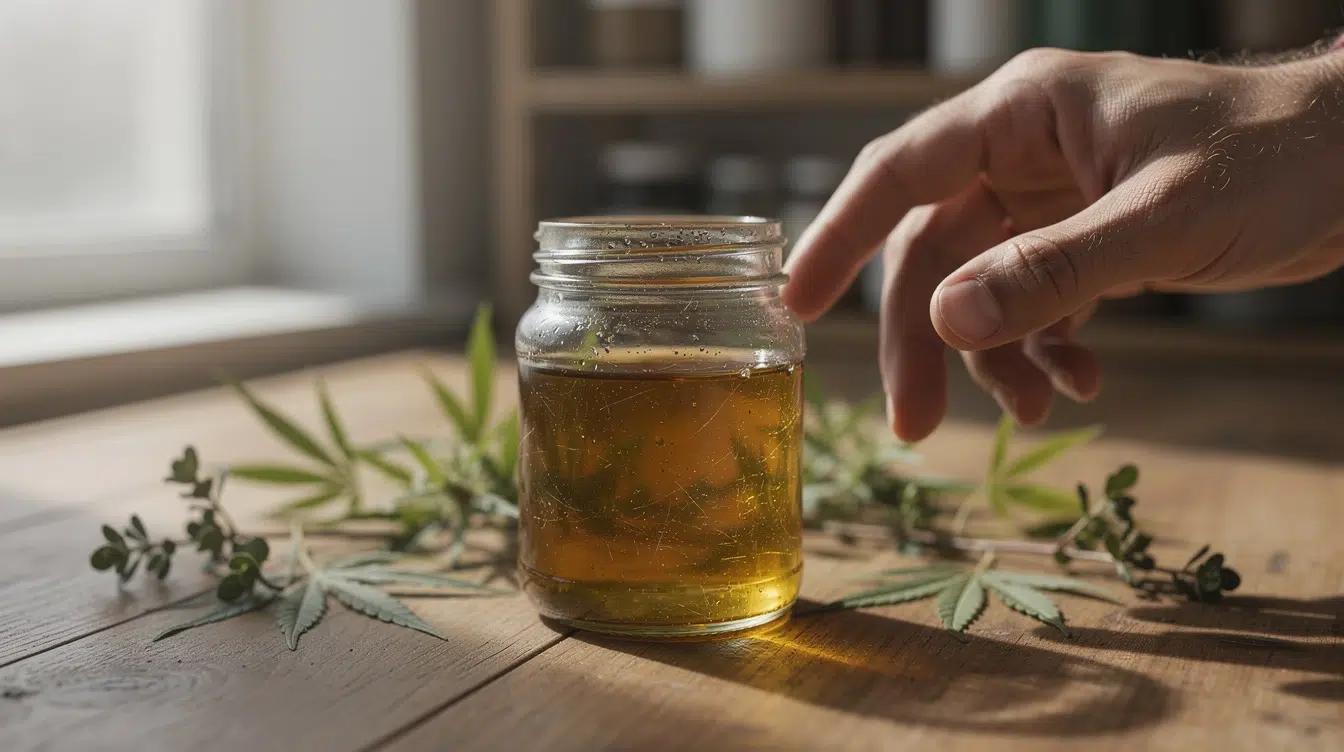

Preserving the full potential of cannabidiol requires a thorough understanding of its main enemies: light, temperature, humidity , and contact with air. Cannabinoids, present in CBD as well as other hemp extracts, are delicate. Even in raw or processed forms (flowers, oils, resins), they can lose potency, flavor, and benefits if CBD storage isn't taken seriously. Let's explore the factors that actually degrade the molecule over time, separating myth from reality, and how to maximize your chances of enjoying a high-quality product for years to come.
What are the major factors in the degradation of cannabinoids?
From harvest to storage, the active ingredients in cannabis, including CBD, are sensitive to their environment. The degradation of cannabinoids never results from a single factor but from the combined action of several elements: light, heat,humidity , and oxygenoften interact, sometimes greatly accelerating the loss of potency.
Understanding the effect of each parameter allows you to adopt the correct storage practices for CBD, whether at home, in transit, or even under long-term conditions. Each condition can have a distinct impact but can also reinforce each other. Meticulous control is therefore essential to avoid unpleasant surprises, both in terms of taste and effectiveness.
Why does light alter CBD?
Light rays, particularly UV rays, are among the primary damage to cannabinoids. Over time, repeated or prolonged exposure causesto oxidize and convert into other, less active compounds, reducing the product's potency and altering its natural aromas.
Regular exposure to direct light —whether from sunlight or intense artificial sources—generates a phenomenon called photo-oxidation. This reaction compromises both the flavor and the relaxing properties sought after when consuming cannabidiol. , storing it in the shade or in a cool place is essential.
How does heat affect the preservation of CBD?
Heat temperatures as low as 21-22°C, slowly but surely. Significantly higher temperatures, from 30-35°C, accelerate this process, increasing the evaporation of volatile terpenes responsible for the aroma and flavor profile.
Premature aging due to heat also deteriorates the texture. CBD oils become rancid, flowers lose their sticky trichomes, and resins dry out. To learn more about the shelf life of CBD oil, see this dedicated article. Maintaining a low temperature, ideally below 20°C (68°F), helps slow down these natural reactions.
The importance of humidity and air in the degradation of cannabinoids
Ambient air provides oxygen,the primary agent ofoxidation. When CBD is exposed to oxygen, it undergoes a gradual transformation that results in the disappearance of some active molecules, replaced by other inert compounds. In the presence ofexcessive humidity, an additional risk arises: the development of mold or undesirable fermentation.
Even a humidity level that is too low is not optimal, as it dries out the plant material, impairs combustion, and reduces vaporization efficiency. Finding the right balance between moisture protection and oxygen limitation remains essential for successful preservation .
What methods are best for preserving CBD?
The diversity of formats (oil, flower, resin, capsule) calls for different but convergent strategies: isolating CBD from its natural aggressors. A few good habits prove beneficial in the medium and long term when it comes to CBD preservation.
Careful management of light, air, and temperature prolongs the product's freshness. This applies to both the casual user and the discerning enthusiast who wants to preserve the full spectrum of cannabinoids and terpenes.
- Store away from light, ideally in an opaque or amber container.
- Maintaining a stable temperature, below 20°C
- Use of moisture-proof for flowers or resins
- Regularly check for the absence of mold
- Tighten the lid securely after each use
- Opt for small quantities taken out at a time, keeping the rest sealed
How effective are specific containers for storage in the shade?
The choice of container is important. Tinted glass jars, such as amber or opal, effectively block a large portion of UV rays . Some jars also incorporate silicone seals, guaranteeing increased protection againstoutside air andhumidity.
For demanding consumers, solutions exist in the form of lined metal boxes or small temperature-controlled chests, adapted to the needs of preserving CBD over long periods or during travel.
Should CBD be refrigerated or frozen to maximize its shelf life?
Refrigerators and freezers are sometimes considered as options to limit the harmful effects of heat on CBD. While cold storage undeniably prolongs the shelf life of certain lipid-rich preparations (such as oils), it requires some specific precautions.
A sudden change from cold to room temperature generates condensation, which is why it's best to let the container return to room temperature slowly before opening. For flowers and raw products, freezing generally offers no more benefit than storing them in a cool, dark place, away from humidityand sudden temperature changes.
Average shelf life depending on CBD products
Each category of CBD product has its own specific requirements and stability against degradation. However, there are relatively reliable guidelines for assessing optimal shelf life, provided the previously mentioned advice is followed.
However, observing and smelling your products remains a wise reflex: change of color, rancid smell, unusual texture or visible moisture frequently signal advanced degradation of cannabinoids, a sign that renewal is necessary.
| Product type | Recommended shelf life | Ideal conditions |
|---|---|---|
| CBD flowers | 6 to 12 months | Vacuum-sealed, opaque jar, fresh & dry |
| Resins / Hash | 8 to 18 months | Airtight containers, low humidity, darkness |
| CBD oil | 6 to 24 months | Amber bottle, away from heat, tightly sealed bottle |
| Capsules & edibles | 6 to 18 months | Closed box, temperate place, shaded from light |
Note: Some additives in oils or edibles (texturizing agents, flavorings) can shorten or prolong the overall stability of the final product, independently of the CBD itself. Therefore, it is always advisable to check the expiration date printed by the manufacturer.
Finally, consumption after expiration generally does not lead to immediate risks, but a diminished effect due to the loss of original cannabinoids and terpenes.
Is it safe to leave CBD at room temperature?
CBD tolerates a stable room temperature of around 18-20°C, especially if kept away from intense heat or bright light. As an added precaution, it's best to choose a cool location, such as an indoor cupboard or a protected drawer, to prevent significant temperature fluctuations.
- Avoid proximity to heating appliances (radiators, ovens)
- Refuse to place on window sills
- Monitor for the appearance of mold on flowers
Can artificial light damage the preservation of CBD?
Yes, even artificial light contributes to the degradation of cannabinoids through oxidation, especially with continuous or very strong exposure (powerful LED ceiling lights, fluorescent tubes). Ideally, products should be stored in the shade or in opaque containers to prevent the passage of light, whether natural or artificial.
- Prefer amber bottles for oils
- Metal or colored jars for solid products
Does vacuum packaging really improve the shelf life of CBD?
Vacuum packaging drastically reduces exposure to oxygen, thus slowing the oxidation and degradation of cannabinoids, particularly in the case of flowers and resins. Combined with storage away from light and at low temperatures, this process significantly increases the shelf life of CBD.
- Vacuum-sealed + shade = maximum freshness
- Minimalist opening to preserve the aromas
| Form of CBD | Duration without a break | Vacuum time |
|---|---|---|
| Flower | 6-9 months | 12-18 months |
| Resin | 9-14 months | 16-24 months |
What signs indicate expired or degraded CBD?
Improperly stored or expired CBD often has an altered odor (rancid, earthy), a different texture (dry flower or cloudy oil), and significantly diminished properties when consumed. On flowers and resins, the presence of white or grayish spots indicates mold growth due to uncontrolled humidity.
- Loss of aroma and brownish color
- Sharp or unusual taste when used
- Lesser effect despite the usual dosage

Editor-in-Chief specializing in CBD
Julien, born on July 17, 1978, in the Paris region, is a prominent writer and expert in the field of CBD products. Following his studies, Julien developed a passion for natural remedies, including CBD. In 2022, he joined the CBD.fr team as an expert and regular contributor. Thanks to his scientific expertise and clear writing style, Julien helps demystify the complexities of CBD, while highlighting its benefits and potential applications through his articles and conference presentations.


