
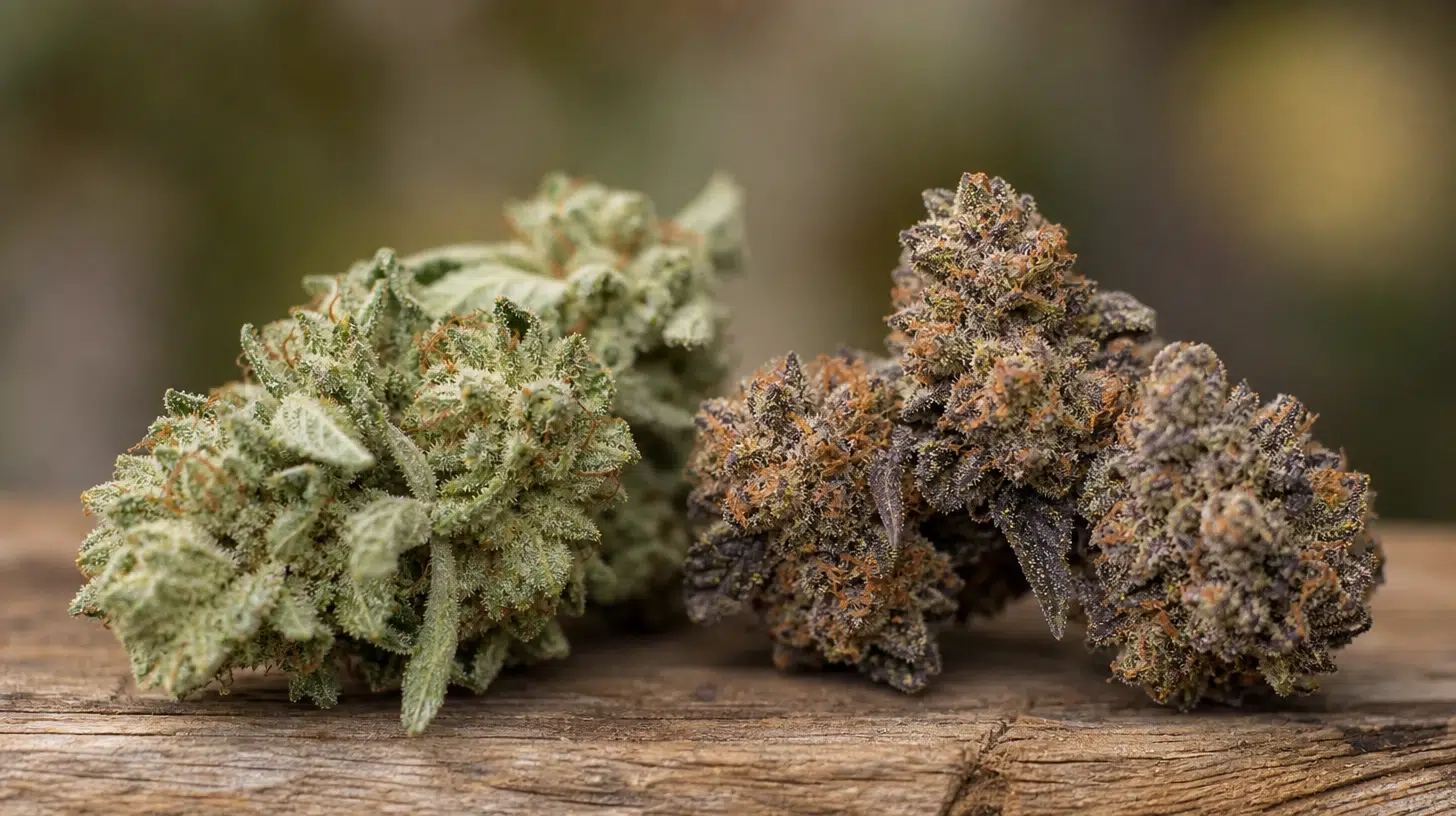

With the rise of cannabis -based products , it's becoming crucial to distinguish between different varieties and uses, especially when comparing CBD and THC flowers . While both come from the same plant , Cannabis sativa L., their molecular composition , effects , and legal status differ radically. Discover how to identify these differences, understand their impact on the body, and choose the right flower for your wellness or recreational needs.
What are CBD flower and THC flower?
The association of cannabis with a plant possessing paradoxical properties lies at the heart of the debate surrounding CBD and THC. To discover a quality selection, consult our CBD flowers. Originating from the same species, they nevertheless differ in their respective cannabinoid, active molecules that interact with our bodies.
CBD flower , also called "hemp flower," comes from varieties selected to contain less than 0.3% THC , but significant amounts of cannabidiol (CBD) . To learn more about the subject and the specifics of cannabidiol, you can visit this website dedicated to CBD . Conversely, THC flower comes from crops where the concentration of tetrahydrocannabinol (THC) is significantly higher, sometimes between 10 and 25%. This major distinction influences not only the effects felt , but also their classification as a legal or illegal product according to current regulations.
Molecular differences and interaction with cannabinoid receptors
Behind this apparent difference lies a scientific reality: CBD and THC are two cannabinoids with a similar chemical structure, but different modes of action on the human body. The nuances reside in slight molecular capable of changing everything on a physiological and psychological level.
Cannabidiol (CBD) and tetrahydrocannabinol (THC) share the molecular formula C₂₁H₃₀O₂, but the arrangement of some atoms is not identical. This subtle difference explains why one produces psychoactive effects while the other remains psychotropically neutral.
How do cannabinoids act on the body?
Cannabinoids influence various functions through their interaction with the endocannabinoid system , present in all mammals. This system consists of CB1 and CB2 receptors distributed throughout the brain, nervous system, and peripheral nervous system. THC acts primarily on CB1 receptors , which are highly concentrated in the brain, and triggers altered perception, potentially affecting mood, spatial and temporal awareness, or motor coordination.
CBD hand, has a lower affinity for CB1 receptors ; it modulates their activity indirectly and tends to mitigate some of the psychoactive effects of THC. It also interacts with other receptors linked to pain, anxiety, and inflammation, thus producing therapeutic effects sought after in the world of modern wellness.
Comparative summary of molecular differences
| Criteria | CBD (Cannabidiol) | THC (Tetrahydrocannabinol) |
|---|---|---|
| Chemical structure | Organized molecules without a closed ring | Presence of a closed cycle responsible for psychoactivity |
| CB1 receiver affinity | Weak | Forte |
| Psychoactive effects | Absent | Present |
Nature of the effects experienced: between therapeutic benefits and psychoactive activity
One of the main differences between CBD and THC lies in the nature of their effects on the body and mind. This criterion guides their uses, both among those who use cannabis for medicinal and those seeking a sensory experience or deep relaxation.
While THC flower is popular for its psychoactive effects and euphoric potential, CBD flower is appealing for its discretion, the absence of strong euphoric sensations and its functional benefits: physical relaxation, stress management or anti-inflammatory.
Which therapeutic effects should be compared?
CBD has built its reputation on a range of documented therapeutic effects . These include anxiolytic properties , beneficial for reducing anxiety or promoting restful sleep . It is also important to be aware of the side effects of cannabidiol . Other studies suggest that it could be helpful in managing chronic pain thanks to its anti-inflammatory properties .
Regarding THC, in addition to a reputation for relieving severe pain or side effects of heavy treatments (such as chemotherapy), its undesirable effects — temporary confusion, cognitive disorders, potential addiction — sometimes limit its medical use, especially if poorly dosed or administered via combustion.
List of main associated effects:
- CBD flower: soothing, sleep support, joint comfort, anti-inflammatory, anxiety reduction, no noticeable addiction.
- THC flower: euphoric sensations, sensory alteration, appetite stimulation, nausea management, relief from certain intense pains but possible presence ofpsychotropic side effects and increased tolerance.
Legality, market and consumption patterns: key points for each flower
The legal of cannabis varies widely depending on the proportion of THC and CBD contained in the flower. CBD flower, provided it contains less than 0.3% THC (the figure applicable to France at the beginning of 2024), is experiencing increasing access to European markets and enjoys widespread social acceptance, justified by its lack of proven danger and the absence ofpsychoactive effects .
However, THC flower, due to its psychoactive, remains categorized as a narcotic in most European countries, including France. Its possession, cultivation, or sale outside of strict medical channels is illegal.
Common consumption patterns
The use of cannabis flowers varies greatly depending on the dominant molecule . For CBD , the spectrum ranges from vaporization and infusion to incorporation into culinary preparations. These methods allow for gentle and gradual absorption, with easy dosage control.
For THC, direct inhalation (smoking or vaporizing) remains the preferred method, despite the known health risks associated with combustion. Some users also opt for extracts (concentrates, oils) to enhance the desired effects, thus reinforcing the need for a safe environment.
Comparative table: legality and modes of use
| Appearance | CBD flower | THC flower |
|---|---|---|
| Legality (France/EU) | Legal ≤ 0.3% THC | Illegal except in exceptional medical circumstances |
| Consumption patterns | Infusion, vaporization, cooking | Inhalation, vaping, extraction |
| Regulatory framework | Sale permitted/advertising restrictions | Criminal sanctions outside of medicine |
Why does this molecular choice change everything for everyday use?
From the user's perspective, choosing between CBD and THC flower not only determines the expected effectsbut also the freedom to consume, recommend, or incorporate these products into a wellness. Opting for CBDmeans accessing modulated effects, without the risk of a bad trip or rapid addiction, in accordance with current recommendations aimed at limiting pharmacological dependence.
Conversely, theuse of THC flowers requires reflection on personal responsibility, the legal , and the potential impact on mental and cognitive health. Each consumer must inform themselves about legal limits and safety precautions, and consider responsible practices before purchasing or consuming.
What are the specific psychoactive effects of THC compared to CBD?
THC produces well-known psychoactive effects: euphoria, altered sensory perception, and impaired memory or concentration. In comparison, CBD does not cause any conscious alterations: the person retains all their mental faculties, enjoying physical and mental relaxation without a "high.".
- THC: altered state, cannabis intoxication, risk of paranoia or momentary anxiety.
- CBD: no cognitive disturbance, relaxing benefits, natural stress regulation.
Can CBD flower be used for the same purposes as THC flower?
While CBD offers therapeutic alternatives and complementary benefits (calming, muscle recovery, sleep support, or anxiety relief), it does not replicate the states of consciousness sought with THC. For those seeking an intense sensory experience, only THC-rich flowers will meet this expectation.
- Similar uses: relaxation, stress management, sleep aid.
- Divergent uses: the search for psychoactive effects is reserved for the THC flower.
Does CBD consumption carry the same risk of addiction as THC?
Unlike THC, which can lead to habituation or problematic long-term use, CBD does not induce any recognized physical dependence. Users therefore benefit from its advantages without developing tolerance or an increased need to maintain the effects.
| Substance | Potential addiction |
|---|---|
| CBD | No dependencies identified |
| THC | High risk of addiction |
What criteria should be prioritized when choosing between a CBD or THC flower?
The choice depends on the objective sought, the legality of the product in the territory concerned, and personal medical history.
- For natural relaxation without loss of control, choose CBD flower.
- For more intense recreational use or in a specific medical setting, THC flower is a possibility where it is permitted.
Always adopt a responsible approach and inform yourself about local rules before making any purchase or use.

Co-founder of CBD.fr
Julien Cordobes is the editor of CBD.fr. Born in 1978 in the Paris region, he first trained in e-commerce before turning to natural health approaches, a dual perspective that now structures his way of writing about cannabidiol: reading the scientific literature as it is, without hardening the conclusions, and presenting it in a language that everyone understands.
He discovered CBD at a time when the French market was developing faster than the information available to it. He acquired CBD.fr in 2022 and then took on editorial responsibility for the blog. Since then, he has published numerous articles covering the daily use of CBD, the interpretation of laboratory analyses, the evolution of the legal framework, and precautions for use.


